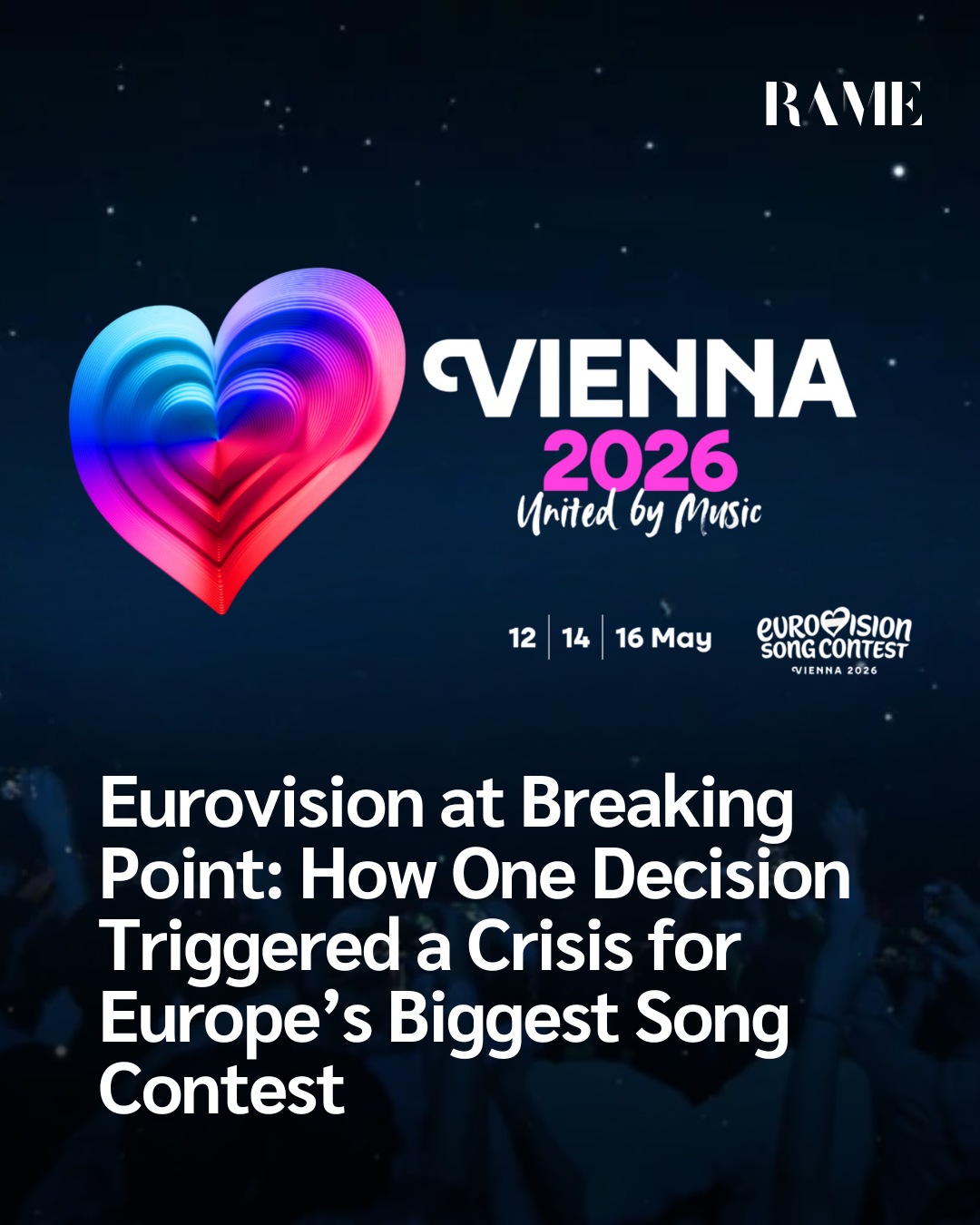
When the European Broadcasting Union confirmed that Israel would take part in the 2026 Eurovision Song Contest, it didn’t just close a procedural question. It lit a fuse. Within hours, four broadcasters announced they would walk away, and the contest that prides itself on being a night of harmless spectacle suddenly found itself at the centre of Europe’s fiercest political arguments.
Eurovision has always carried politics around its edges, even when organisers insisted it was just about the music. This time, the strain is inside the room. The withdrawals and the divisions they expose point to a deeper tension in Europe: how to hold on to cultural exchange when the realities of war make neutrality feel impossible.
What the EBU Actually Decided
The vote that never happened is the heart of this story. In Geneva, members of the European Broadcasting Union adopted a set of new rules aimed at making the contest more transparent and reducing outside pressure on the voting process. The changes were presented as a way to rebuild confidence after repeated criticisms about this year’s and last year’s results.
Crucially, there was no vote on Israel’s participation. The EBU made it clear that membership alone determines eligibility, and Israel’s public broadcaster KAN meets those criteria.
That procedural logic did nothing to calm broadcasters who felt the context mattered more than the rulebook.
Spain, the Netherlands, Ireland and Slovenia each said they would not compete in Vienna next year. Belgium signalled it might follow.
As Dutch broadcaster AVROTROS put it, the situation is “not compatible with the public values” it holds.
Israel and Its Supporters Respond
In Jerusalem, President Isaac Herzog welcomed the decision.
Israel deserves to be represented on all stages of the world, he said, thanking those who backed its participation.
Germany also spoke clearly. The broadcaster ARD reminded critics that Eurovision is run by broadcasters, not governments. Chancellor Friedrich Merz and Culture Minister Wolfram Weimer went further, warning that excluding artists because of their nationality or religion would cross a line Europe should not erase.
The Israeli broadcaster KAN did not shy away from the politics either.
Golan Yochpaz, its CEO, argued that removing Israel would amount to a cultural boycott, one whose effects could spread beyond the contest.
Are broadcasters prepared to sign their names to a cultural boycott? he asked. Are we ready for what that would mean?
It is an argument that will resonate with anyone wary of cultural sanctions becoming symbolic punishment.
Broadcasters Walk Away
The withdrawals are not identical, but they rhyme.
Ireland’s RTÉ said participation “remains unconscionable” given the ongoing humanitarian situation in Gaza.
Spain’s RTVE pointed to distrust in the organisation of the contest and pressed for a secret ballot, which organisers refused.
Slovenia made perhaps the starkest moral appeal, saying its decision was made on behalf of “the 20,000 children who died in Gaza”, reflecting figures repeatedly cited by the Gaza Health Ministry.
In Belgium, even before an official withdrawal, partisan pressure escalated. MPs from both linguistic communities argued that hosting or broadcasting the event would contradict national values.
The Eurovision slogan is unity through music. The withdrawals suggest that, at least for some, unity is no longer believable when the conflict is this raw.
The Voting Debate and the Shadow of Doubt
Even setting aside the war, voting has become a recurring headache.
In 2025, Israel’s Yuval Raphael surged after the public vote. In 2024, Eden Golan did something similar. Critics called it manipulation; the EBU called it coincidence and reinforced the ballot.
The new safeguards are meant to reduce the power of external campaigns, including social media pushes and diaspora mobilisation. Whether they will satisfy sceptics remains open.
Nothing in Eurovision is immune to conspiracy theories, but the persistent gap between jury and public scores has made the contest unusually fragile this year.
A Contest Trying to Stay Above the Fray
Eurovision reaches more than 150 million viewers most years. For most people, it is two hours of glitter, overproduction and heartfelt oddness. For broadcasters, it is a brand, a cultural duty and a diplomatic minefield.
Delphine Ernotte Cunci, the EBU’s president, framed the new rules as a reaffirmation of what the contest is meant to be: a neutral space for exchange.
The problem is that neutrality is a harder sell when artists, audiences and governments can’t separate art from what is happening on the ground.
Some countries are leaning into that reality. Others are holding to procedural consistency. The result is a split that feels larger than a music show.
Who Will Show Up in Vienna?
At this point, the picture is incomplete.
Spain, the Netherlands, Ireland and Slovenia will stay away.
Belgium is deciding.
Iceland has left the door open.
Finland and Sweden have expressed doubts but signalled they will continue.
Austria, as host, has been at pains to assure everyone it is prepared for whatever security and diplomatic load comes with the year ahead.
The next few months will tell us if the withdrawals stop at four or begin to ripple.
What This Crisis Really Says
Here’s the thing: Eurovision cannot decide what Europe believes about war, justice or human suffering. But its organisers can’t pretend those questions won’t reach the stage either.
The contest’s appeal has always been that it offers a ritual of togetherness. At a time when Europe is arguing fiercely about the meaning of solidarity, and about how culture intersects with politics, even that ritual is contested.
We can accept that art is not politics and still admit that politics keeps tapping on the back of the audience’s chair.
Whether Eurovision can survive that tension without losing what makes it special is the question that matters more than any single entrant.
If the contest is to remain a celebration, it may need to own the fact that celebration is never as apolitical as it pretends to be.