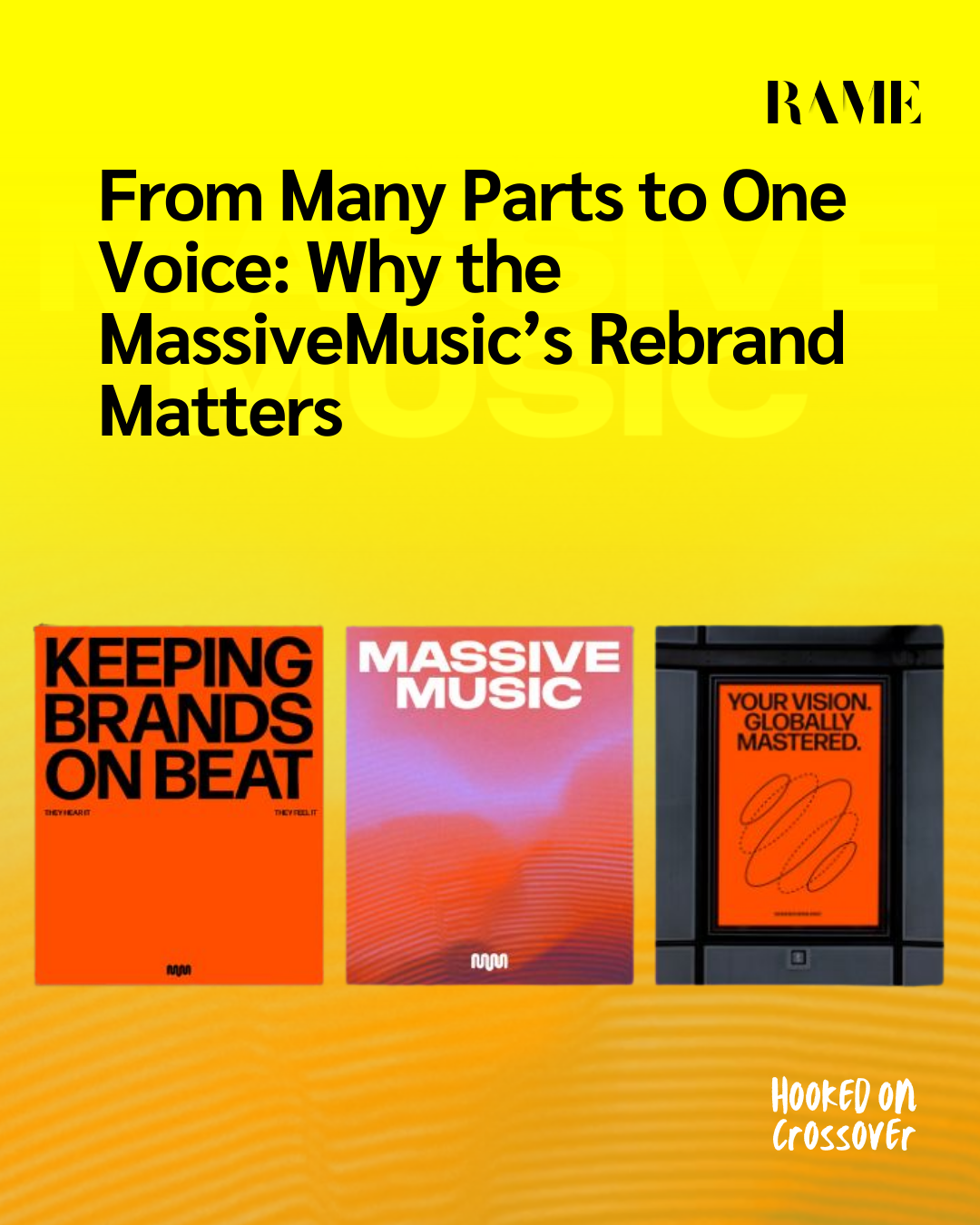
This week, Koto a creative studio renowned for crafting brand identities unveiled a complete rebranding of MassiveMusic. The move comes as MassiveMusic integrates multiple subsidiaries formerly distinct businesses into a single, unified entity, resetting its purpose in the industry of sonic branding.
The timing isn’t arbitrary. In a media landscape saturated with visual noise, brands increasingly recognise the strategic power of sound: from sonic logos to audio branding in campaigns, in-app experiences, or advertising. For a company like MassiveMusic, which has spent 25 years helping global brands build distinctive audio identities, this rebrand signals not only a fresh look, but a new ambition: to become the global leader in end-to-end music and sound services.
It’s exactly the kind of systemic clarity many brands demand these days and that’s why this redesign could mark the start of a new era not just for MassiveMusic, but for the broader audio branding business.
What’s Been Consolidated and What Remains
Under the new structure, MassiveMusic now absorbs several previously separate companies: 7digital, Big Sync Music, Musicube and Resonance Sonic Branding.
- 7digital brings global music distribution and technology infrastructure.
- Big Sync Music contributes advertising and licensing expertise.
- Musicube delivers AI-powered music intelligence, metadata and search functions.
- Resonance Sonic Branding adds strategic services and sonic branding know-how.
At the same time, the consumer-facing business of Bandcamp remains unaffected, according to the parent company Songtradr.
The objective: transform a patchwork of specialized services into a single, streamlined partner for brands, platforms, and agencies eliminating friction, reducing handoffs, and offering a full-stack solution for music licensing, creation, distribution, strategy, and sonic branding.
What the New Visual and Digital Identity Looks (and Sounds) Like
Koto’s design reimagines how a music-first brand presents itself visually and tonally. The guiding notion: “making sound visible.”
- The refreshed logo retains its signature asymmetry, but with sharper lines and a taller, more assertive stance signalling confidence, clarity and presence.
- The custom wordmark is wider and bolder, designed to carry weight across media and look strong in both print and digital contexts.
- Colour usage becomes sparing: a monochrome base for consistency and sophistication, with the brand’s iconic orange reserved for moments demanding energy or emphasis.
- Typography plays with the notion of sound volume: using a font system (Forma DJR Display) that flexes across “quiet,” “medium,” and “loud” typographic modes mirroring the dynamics of audio itself.
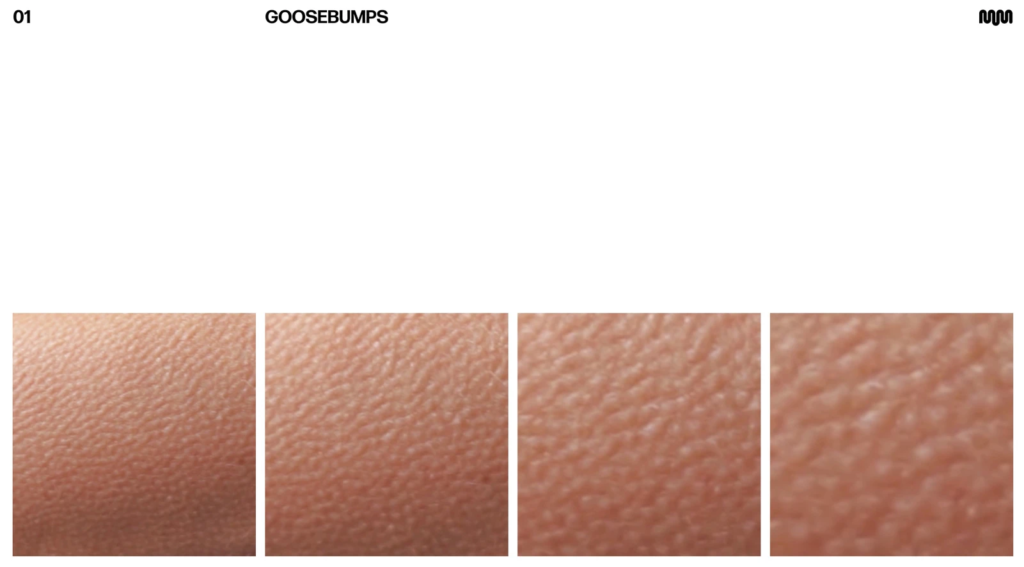
- The most imaginative element: a generative pattern language that visualises physiological and emotional reactions to sound things like goosebumps, tingling spines, hairs standing on end. Gradients pulse like frequencies and subtle motion brings a sense of immersion and physicality to the brand.
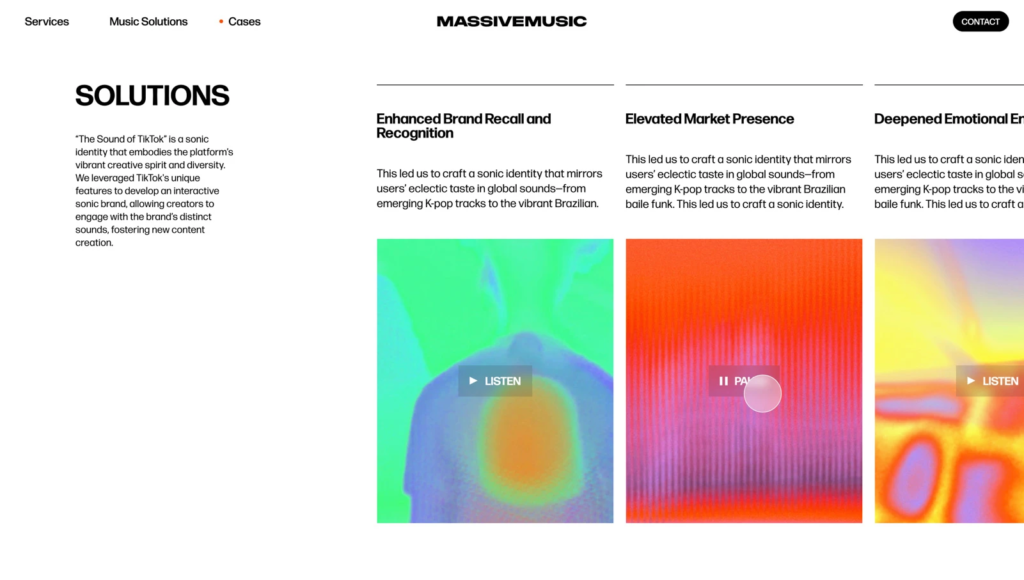
Beyond the brand book, this identity lives online: with a website rebuilt in collaboration with developer Good City that translates expressive design into a high-performance digital experience. Motion effects, pattern animations and layouts were rebuilt in browser-native code, ensuring the new identity doesn’t collapse under the constraints of the web.
In the words of Koto creatives Sam Howard (Creative Director) and Anton Martinez (Digital Creative Director): “We built the strategy, the system and the site to work as one. The result is a brand that looks and feels like MassiveMusic everywhere it shows up.”

What This Means for the Industry and for Brands
This rebranding is more than visual re-skinning. It reflects a shift in how music and sound are being treated by brands not as afterthoughts or background decoration, but as strategic levers in marketing, user experience, brand identity, and emotional resonance.
According to Paul Langworthy, Chief Revenue Officer of Songtradr and MassiveMusic, the consolidation addresses a persistent industry problem: fragmentation. Many companies struggle with disparate partners for licensing, distribution, branding, and production. MassiveMusic aims to unify all of that.
“We bring our entire portfolio platform tech, creative services, licensing, data into a connected, end-to-end ecosystem,” Langworthy said. “Fewer handoffs, less confusion, faster and more streamlined rights management for clients.”
That has real implications. For brands operating globally, this consolidation allows them to manage their sound identity, licensing, and creative production through a single partner reducing complexity and ensuring consistency. For artists, producers and rights-holders, it can mean better metadata, fairer compensation, and more efficient workflows.
In a time where audio from podcasts to short-form video to immersive experiences is regaining power in communication, this unified model could set a new standard for how sound branding is delivered.
Challenges and What to Watch Next
Of course, big ambitions come with big challenges. Making a brand that works equally well for a global licensing platform, bespoke sonic identity creation, and intuitive licensing workflows is a tall order. Translating expressive, often emotionally charged audio work into a visual and digital identity also risks losing nuance.
There’s also the question of whether clients especially those used to working with specialised boutique agencies will embrace a “one-stop shop” model. For some, the value lies in tight relationships, bespoke service, or boutique character. Whether MassiveMusic can maintain creative depth while scaling remains to be seen.
Finally, in a world of rapidly evolving AI tools where some of the very services MassiveMusic offers may increasingly be automated there’s an open question around how human creativity and emotional nuance remain central.
What This Rebrand Says About the Future of Sonic Branding
The transformation of MassiveMusic offers a strong signal: sound branding is no longer niche or marginal. It’s increasingly mainstream a core part of how brands communicate across media, markets and cultures.
By investing in a unified brand identity and technology stack, MassiveMusic and Koto aren’t just redesigning a logo. They’re betting on sound becoming a universal language of brand identity, capable of connecting emotionally with audiences at scale.
For marketers, agencies, rights-holders, artists and technologists, this is worth watching. Because sound doesn’t just support a brand it can define it.
Maybe in a few years, when you hear a sonic logo ahead of a commercial or experience a finely tuned audio atmosphere in an app you’ll know there’s more behind it than you thought.