

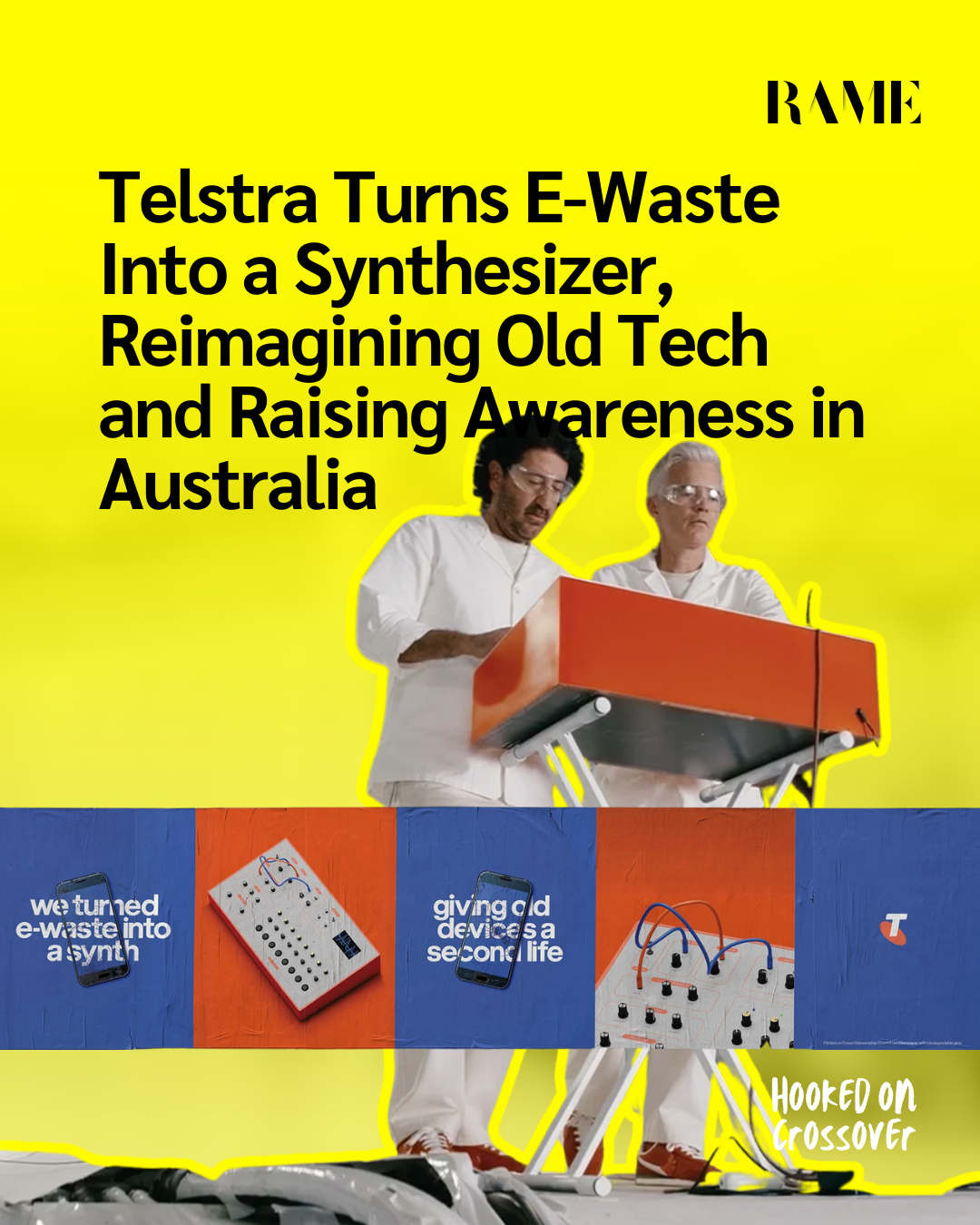
In Melbourne’s bustling central business district, a piece of art and musical ingenuity has emerged from scraps of yesterday’s tech. What looks and sounds like a synthesizer is more than just an instrument; it’s a visual and cultural statement about how society treats electronic waste. Built almost entirely from discarded phones, modems and gaming gear, this one-off synthesizer turns a growing environmental problem into a funky, immersive conversation about reuse and creativity.
What this really means is that rather than slogging viewers with statistics or guilt, the telecommunications giant behind it has chosen to show what’s possible when machines get a second life.
A Campaign With a Heartbeat: Second Life Sounds
Telstra’s latest initiative, dubbed Second Life Sounds, partners the telco with creative agencies +61 and Bear Meets Eagle On Fire, along with Australian electronic music group The Avalanches, to push the boundaries of environmental storytelling.
At its core, the project demonstrates how e-waste components that would otherwise fill landfill can be repurposed into something that resonates across age groups and creative communities. Instead of publishing another brochure about recycling targets, Telstra has built a fully functional synthesizer from predominantly repurposed materials, making sustainability tangible and fun.
We wanted to show that e-waste can be repurposed into something that people can relate to universally. Through music, we are demonstrating the amazing link between sustainability and creativity, said Robbie Chater of The Avalanches.
The synthesizer itself incorporates over 80% reclaimed electronic waste, including old phones, electronic cables and vintage gaming parts. It will be on display at Telstra’s flagship Discovery Store on Bourke Street in Melbourne through March and April, giving passersby both a spectacle and a prompt to rethink unused devices gathering dust at home.
The E-Waste Backdrop: Why This Matters
Australia faces a unique challenge with electronic waste. On average, Australians produce roughly three times the global per-person e-waste rate, with around 20–22 kilograms of discarded gadgets annually. That’s compared to a global average closer to 7 kilograms per person.
What’s striking is not just the volume but the opportunity. Many of these devices sit unused in drawers and cupboards estimates suggest Australians hold on to an average of three unused devices each. A YouGov survey commissioned by Telstra even found that millions of Australians say their oldest unused device is more than a decade old.
From a sustainability and materials perspective, e-waste contains valuable metals and rare earth elements. Responsible recycling or reuse can help keep those materials circulating in the economy instead of being lost to landfill or incineration. Global reports estimate that more than 60 million tonnes of e-waste were produced in 2022 alone, with only a fraction properly recycled.
The Human Element: Recycling Beyond Rhetoric
The Second Life Sounds initiative is designed to gently shift behaviour without preaching. Telstra’s 2030 environmental commitment: reuse, recycle, repair or donate one smart device for every two sold in Australia, underscores a broader ambition toward circular economy principles.
Rather than just tell consumers to recycle e-waste, we wanted to encourage them to imagine the possibilities a simple action like bringing an old device in can actually make, said Blake Crosbie, Managing Director of +61.
This contrasts with the often abstract discussion around targets and percentages. Here’s the thing: seeing is believing. A giant synthesizer built from everyday technology captures the imagination in a way a recycling stat never will.
Where Creativity Meets Responsibility
At its best, Second Life Sounds isn’t just a clever stunt; it’s a reminder that the choices consumers make about their old tech have consequences and possibilities. It provides a concrete example of how sustainability can fold into culture and creativity rather than sit on the fringes of environmental policy.
As e-waste becomes one of the fastest-growing waste streams on the planet, initiatives like this signal a shift in how big companies communicate environmental responsibility. Instead of simply outlining goals, the conversation moves into the world people live in: music, art, play. This might not solve the e-waste crisis on its own but it could start thousands of conversations that do.