

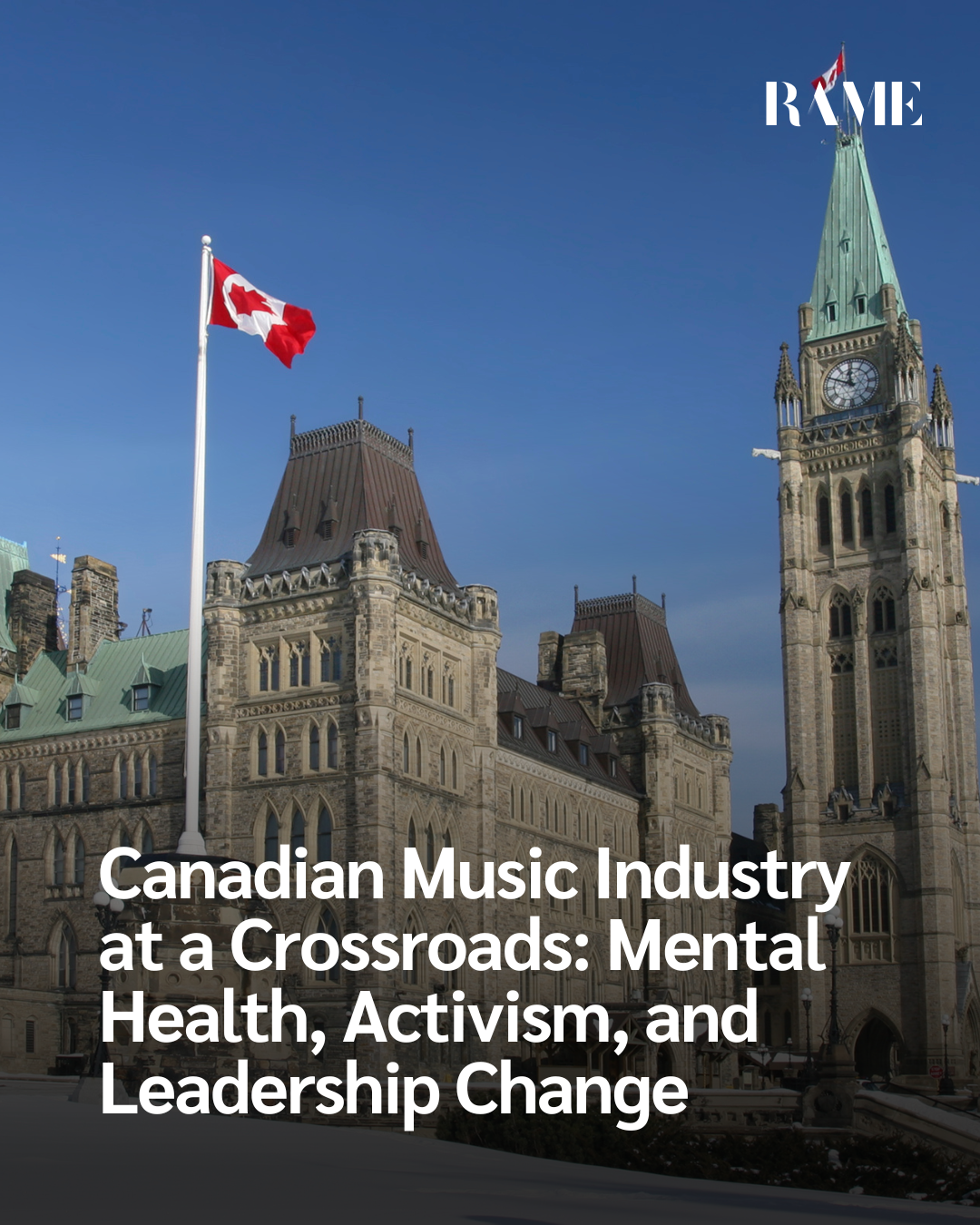
A wave of developments in Canada’s music scene is capturing attention for reasons that go well beyond new album drops or festival lineups. A first-of-its-kind national report warns of a deepening mental health crisis among professionals across the industry. At the same time, Montreal artists are taking a stand on global issues, and a long-time leader in Canada’s live music sector has announced her departure. Each story highlights pressures facing those who create, support, and promote music in the country, and together they point to deeper questions about sustainability, culture, and responsibility.
A Mental Health Crisis Revealed
For the first time in Canadian music history, a comprehensive study has put hard numbers behind what many have long suspected: the industry’s demands are seriously wearing down the people who make it tick. The Soundcheck: Mental Health in the Canadian Music Industry report from Revelios and Mental Health Works surveyed more than 1,250 music professionals nationwide from artists and crew members to venue operators, managers, educators, festival staff, and executives.
Participants overwhelmingly reported high rates of mental health challenges, with 86 percent saying they’ve struggled personally and 95 percent witnessing others who are suffering. The survey highlighted anxiety, chronic fatigue, persistent sadness, and sleep disturbances as common symptoms. In its most sobering findings, between 43 and 53 percent of those surveyed said they’d felt life wasn’t worth living or had considered suicide.
“Having our own Canadian baseline data is critical. We often assume things aren’t as bad here as elsewhere this report challenges that assumption directly,” says Catherine Harrison, president and founder of Revelios. “The findings mirror international data on mental health in the music industry, and that should prompt an honest, open conversation about the state of well-being in our own backyard.”
The report doesn’t just paint a bleak picture. It points to structural causes financial stress from unpredictable income, unrealistic performance expectations, irregular work schedules, and stigma around discussing mental health and substance use. Only 10 percent of respondents said their workplaces had meaningful mental health resources, and a striking 80 percent had never received formal training to navigate these challenges.
Experts quoted in related coverage stress that awareness alone won’t move the needle. “Awareness without action is just information,” Harrison says. The push now is for systemic supports, better industry education, and a more open culture around well-being.
Montreal Musicians Join a Global Cultural Boycott
Intertwined with discussions about artist welfare are broader questions about the role of music and musicians in social and political movements. In Montreal, more than 80 artists and cultural workers have signed on to a cultural boycott of Israel, coordinated by the grassroots group Musicians For Palestine Montréal.
Signatories include notable names such as Patrick Watson, Godspeed You! Black Emperor, Bibi Club, TOPS, and Sean Nicholas Savage, alongside nearly three dozen music labels, promoters, and organizations, including Arbutus Records, Constellation Records, Hot Tramp Management, and Bravo Musique. The boycott aligns with the broader Boycott, Divestment and Sanctions (BDS) movement and commits participants to refuse performances in Israel or funding from organizations linked to the Israeli state.
A spokesperson for Musicians For Palestine Montréal framed the boycott as a matter of ethical responsibility. “We refuse to allow our music and our labour to artwash apartheid and genocide,” they said, pointing to historical parallels with cultural boycotts during South Africa’s apartheid era.
The move reflects how artists increasingly see their platforms as sites of political engagement, not just entertainment and it opens up debates within and beyond the music community about freedom of expression, solidarity, and the costs of taking a stand.
Leadership Shift at the Canadian Live Music Association
Amid the industry’s challenges, leadership in one of its key advocacy bodies is changing. Erin Benjamin, president and CEO of the Canadian Live Music Association (CLMA), is stepping down after more than 12 years at the helm.
Benjamin’s tenure saw the organization, formerly Music Canada Live, weather seismic shifts from the rise of global festivals to the pandemic’s devastating impact on live performance. Under her leadership, CLMA championed national recognition of live music as both a cultural and economic driver and oversaw Hear and Now, the first national economic impact assessment of Canada’s live sector.
“Leading the CLMA has been one of the great privileges of my career,” Benjamin said in announcing her departure. “What began as a shared vision across a passionate community has grown into a strong national organization with a clarity of purpose and the capacity to forge lasting change.”
Her successor as chair, Vancouver executive Nate Sabine, praised her contributions as “incommensurable,” noting that her leadership helped unify a fragmented sector and guide it through some of its most trying moments.
What This Means for Canada’s Music Scene
Here’s the thing: these threads mental health, social activism, and industry leadership aren’t separate. They all point to a music ecosystem under pressure and evolving rapidly. Professionals are asking tough questions about sustainability, purpose, and responsibility, whether that’s fighting burnout, using music as a force for social change, or steering entire sectors through uncertainty.
The industry now faces a choice. Without meaningful investments in mental health support, there’s a real risk of talent loss and a decline in the diversity and vibrancy that make Canadian music distinctive. At the same time, artists’ engagement with global issues suggests a community that refuses to shrink from broader social debates.
What comes next will depend on whether stakeholders from labels to government agencies to artists themselves can work together to build structures that support both well-being and creative expression. For Canada’s music scene, the moment calls not just for reflection but for action.