

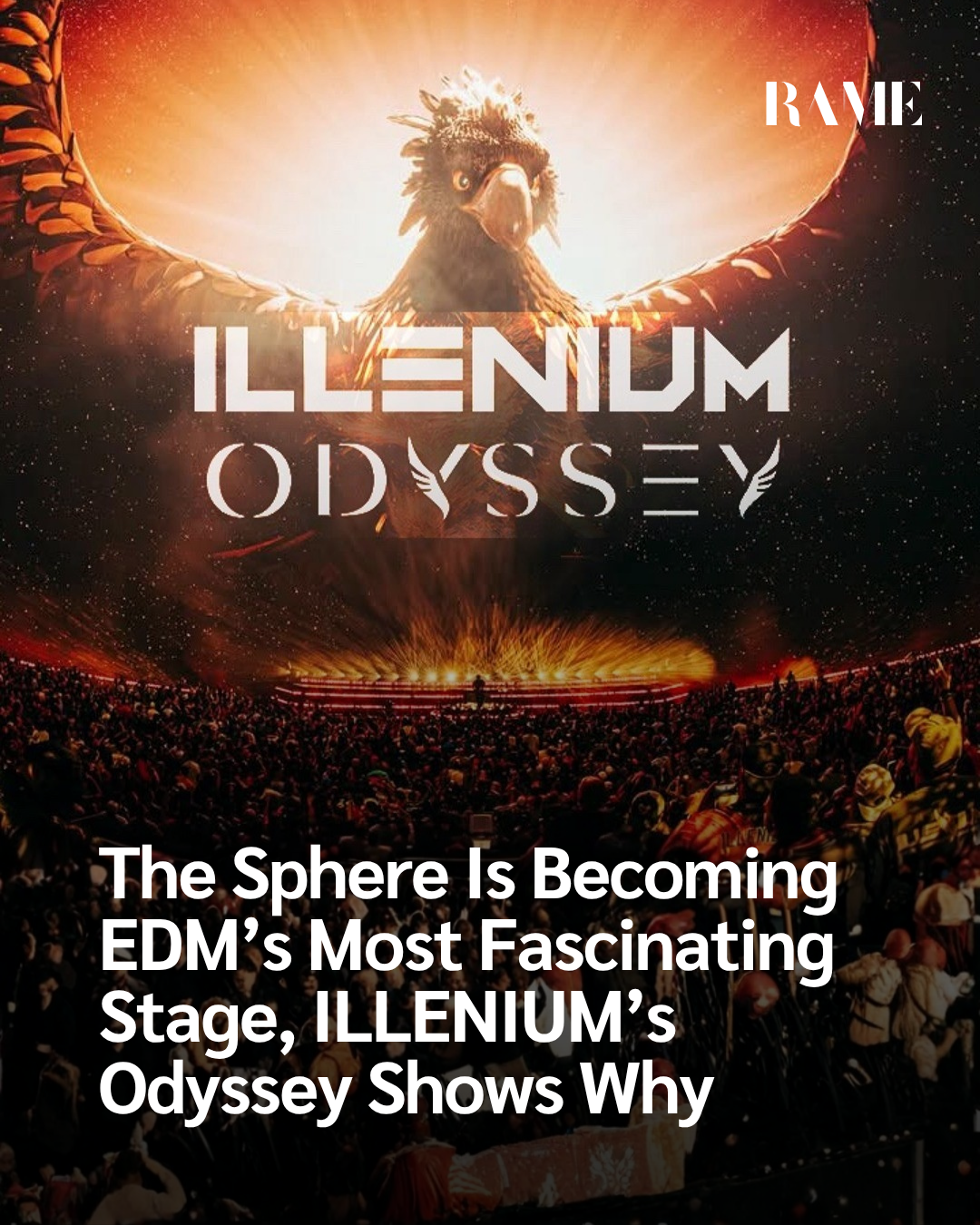
Las Vegas has never lacked spectacle, but the rise of the Sphere has shifted the conversation around live music production in a big way. The venue’s massive wraparound LED canvas and immersive sound system have forced artists to rethink what a concert actually is. For electronic music in particular, the format is proving unusually fertile ground.
That’s why ILLENIUM’s recent Odyssey residency feels like more than just another headline run. It sits at an inflection point. Over nine nights, the show demonstrated how EDM is adapting to the Sphere’s technical demands, how fan culture translates into real economic impact for the city, and how the residency model itself might evolve here.
To understand why Odyssey matters, it helps to zoom out and look at how electronic music has gradually taken hold inside the venue.
The Evolution of EDM at the Sphere
Electronic music didn’t arrive at the Sphere all at once. It came in phases, each experimenting with the format in a different way.
The first major step came from Anyma, the project led by Matteo Milleri. His “End of Genesys” residency became the venue’s first true electronic music showcase and quickly expanded due to overwhelming demand, signaling strong appetite for immersive EDM shows in the space.
From there, the format widened. UNITY, a collaboration between Insomniac and Tomorrowland, brought a festival-style approach to the Sphere, blending different brand worlds and rotating artists across multiple nights.
Now comes Odyssey, a residency built around a single artist and a new album. In other words, the Sphere has already hosted three distinct EDM production models:
- Artist-led residency (Anyma)
- Festival brand collaboration (UNITY)
- Album-release-driven residency (ILLENIUM)
For producers and promoters watching closely, that progression matters. It suggests the venue is less a traditional concert hall and more a new category of stage.
Building Odyssey: Film-Scale Production for a Concert Venue
What stands out immediately about Odyssey is the production pipeline behind it. Shows at the Sphere require visuals built specifically for its enormous display surface and extreme resolution requirements.
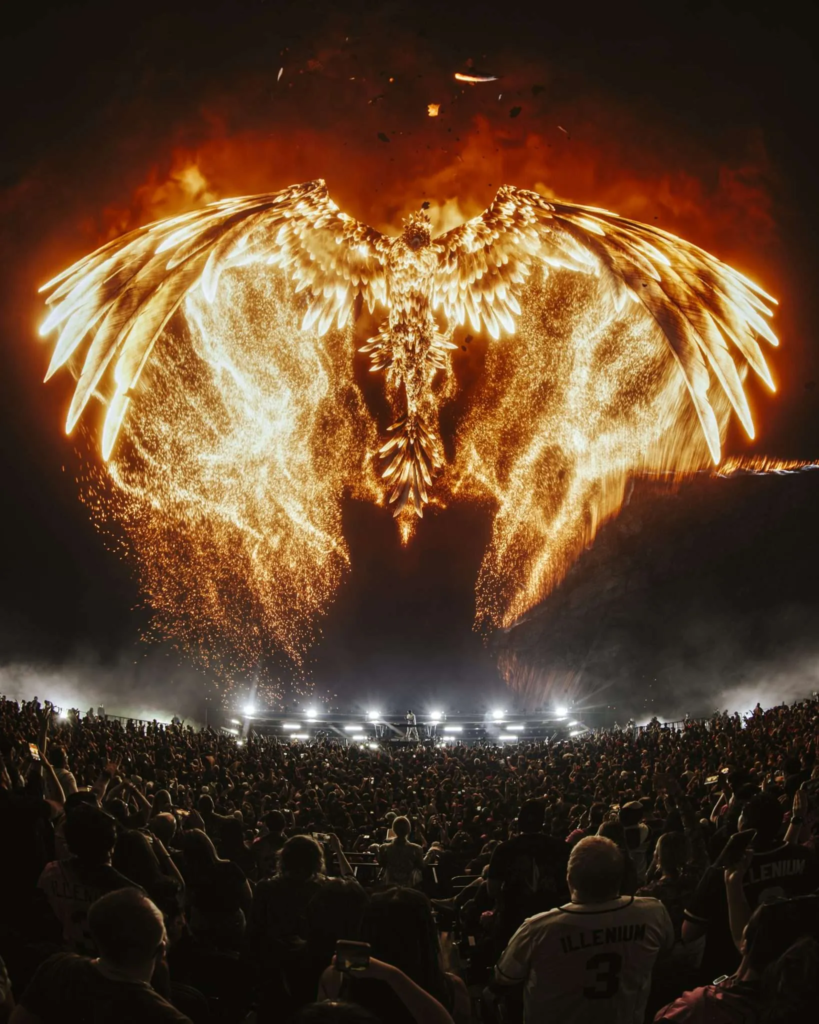
For Odyssey, Berlin-based animation studio Woodblock led the visual production, developing assets in ultra-high-resolution CGI to match the venue’s screen system. The Sphere’s interior LED display ranks among the highest-resolution immersive screens ever used in entertainment, enabling massive visual storytelling across the entire venue interior.
The team relied on tools more common in film production than live events, including Houdini Solaris pipelines, Universal Scene Description frameworks, and Nuke compositing. Previsualization was mapped early by The Third Floor, a workflow often associated with blockbuster filmmaking.
That shift is worth noting. At the Sphere, concert production increasingly looks like film production, months of digital world-building before the artist even steps on stage.
A Narrative Concert, Not Just a DJ Set
Creative choices inside Odyssey reveal another pattern that may shape the future of Sphere shows: restraint.
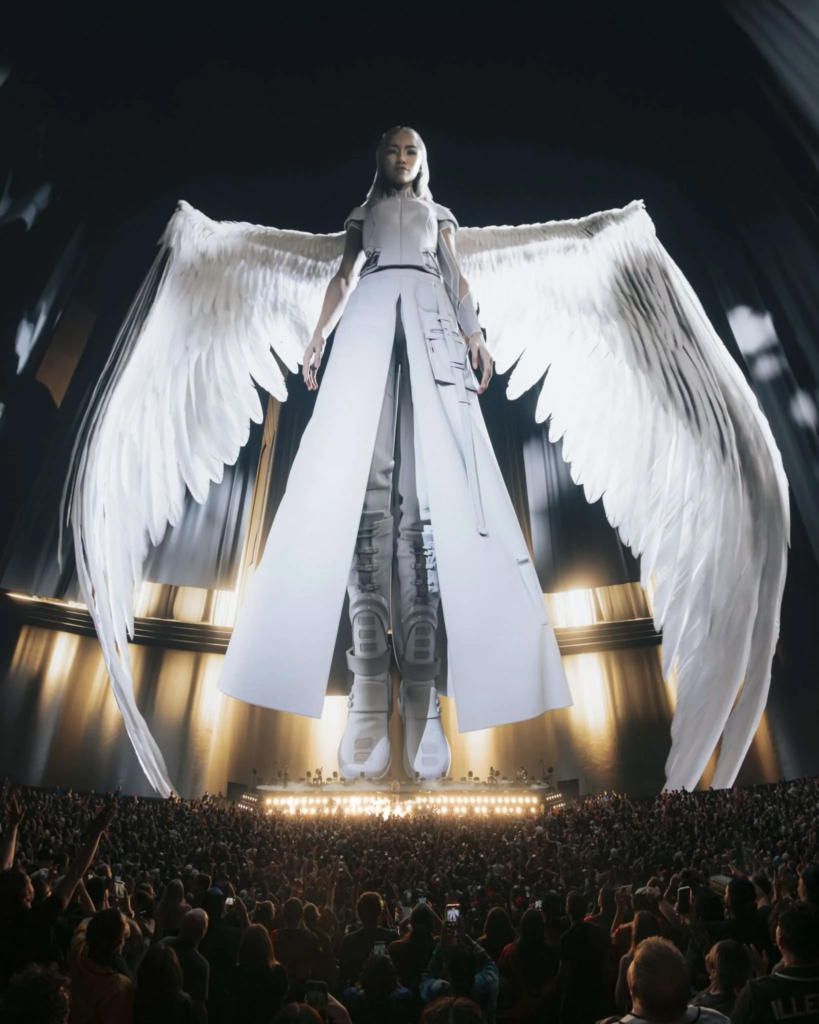
Instead of saturating the screen every second, the visual design builds a story arc tied to the album’s themes. Two characters travel through evolving environments that mirror the emotional beats of the music. The pacing leans closer to theatre staging than to the typical EDM visual barrage.
That approach mirrors how the project itself was built. In interviews around the residency, ILLENIUM explained that the show’s storyline actually came first, with the album later shaped around that narrative concept.
In other words, the live show wasn’t adapting an album. The album was adapting the show.
Musically, the set also pushes beyond standard DJ performance formats. MAKO performed live alongside a string quartet throughout the show, adding orchestral layers that took advantage of the venue’s immersive sound design.
That blend of electronic production, cinematic visuals, and live instrumentation is becoming a hallmark of Sphere-ready performances.
The Fanbase Effect: When a Residency Takes Over a City
One of the most telling aspects of Odyssey had little to do with the stage itself.
Walking through casinos and along the Las Vegas Strip before the shows, ILLENIUM jerseys were everywhere. Not the occasional piece of concert merch, entire clusters of fans wearing them. The atmosphere felt closer to a playoff game weekend than a standard concert night.
For Las Vegas, that matters.
Residencies at the Sphere don’t just sell tickets. They drive hotel stays, restaurant traffic, and nightlife spending. A visibly mobilized fanbase, the kind EDM artists often cultivate, effectively turns each show weekend into a micro tourism event.
From a hospitality and entertainment industry perspective, that’s part of the venue’s value proposition.
The Nine-Night Strategy: Turning One Show Into Multiple Events
Another interesting production choice was how the residency was packaged.
Instead of repeating the same lineup, each night featured a different opening act:
- Dab The Sky
- Wooli
- Levity
- Audien
- Ray Volpe
- SLANDER
- DJ Diesel
- Tape B
That structure effectively turned one residency into nine variations of the event. It’s a subtle but smart shift in how multi-night runs can be marketed and experienced.
For promoters, it provides multiple entry points for fans. For the venue, it spreads demand across different segments of the EDM audience.
Why the Sphere Works So Well for Electronic Music
The more shows that happen here, the clearer something becomes: EDM fits the Sphere unusually well.
The venue was designed around immersive storytelling, massive digital environments, and spatial audio. Those are elements electronic artists have been experimenting with for years at festivals and arena tours.
But the Sphere scales them up dramatically. The building’s interior LED display spans roughly 160,000 square feet, while the overall structure pushes immersive entertainment technology into territory rarely seen in traditional concert venues.
That technical reality has an interesting side effect: genres that rely heavily on visuals particularly electronic music may ultimately define what the venue becomes known for.
The Bigger Industry Signal
Looking at the timeline so far, a pattern is emerging:
- Anyma proved EDM could work at the Sphere.
- UNITY demonstrated how festival brands can adapt to the format.
- Odyssey suggests album-driven cinematic residencies may be the next evolution.
And with Odyssey debuting at No. 1 on Billboard’s Top Dance Albums chart marking another chart-topper for ILLENIUM the project connects streaming success, touring strategy, and venue innovation in one package.
For artists planning future Sphere productions, the message is clear: this isn’t just a venue booking. It’s a full creative ecosystem.
What Comes Next for EDM at the Sphere?
The real question now is simple: who’s next?
The early experiments have shown there’s no single blueprint for electronic music here. Artists can build cinematic storylines, festival hybrids, or serialized residencies tied to new music releases.
What’s likely is that the bar will keep rising. The cost and complexity of Sphere productions mean only the most ambitious concepts will make sense economically and creatively.
ILLENIUM’s Odyssey run offers a snapshot of that shift in motion. Not just a show, but a glimpse into what live electronic music might look like as technology and storytelling continue to converge.
And if the crowd response both inside the venue and across the city is any indication, the Sphere is just getting started.