

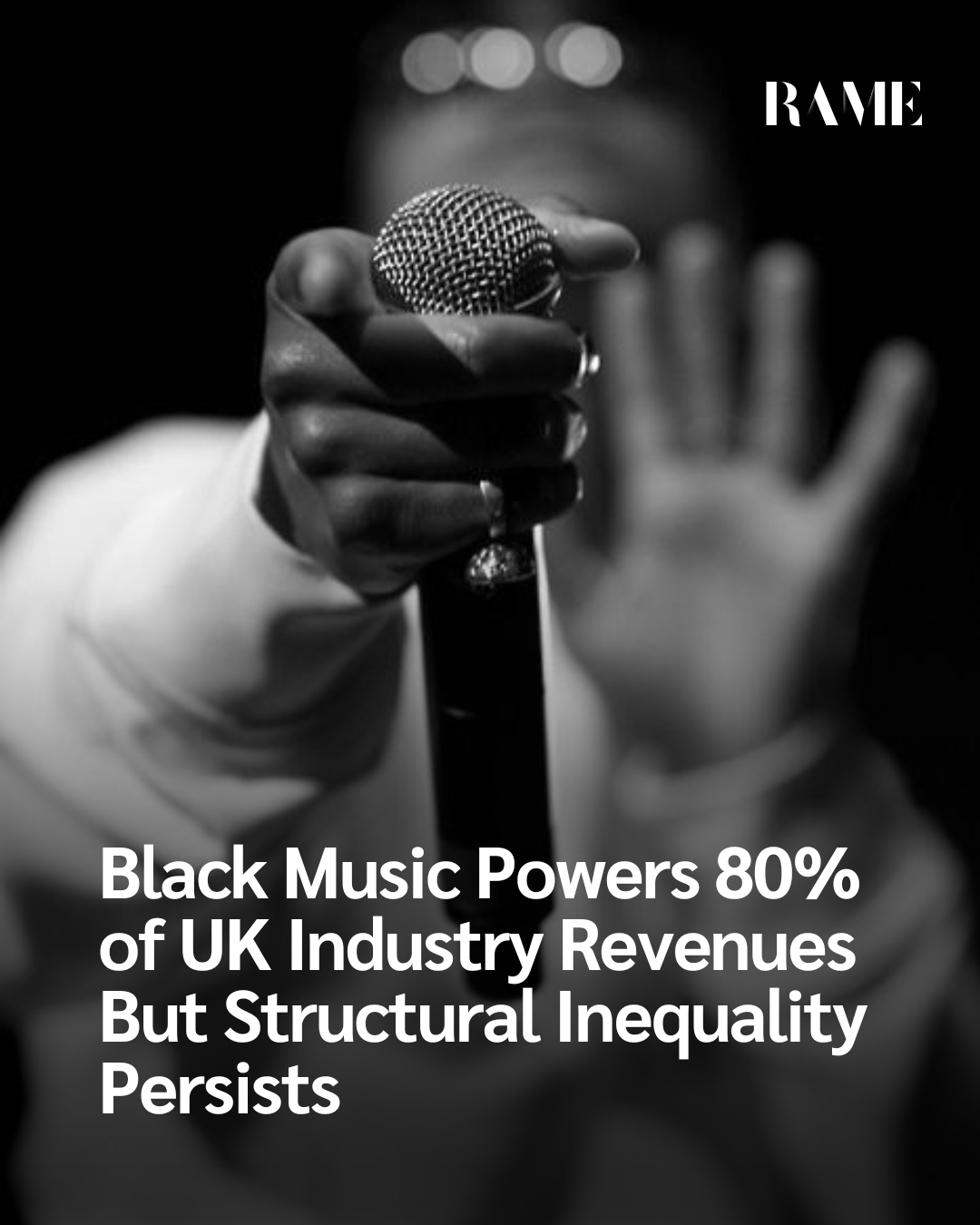
For decades, Black music has defined the sound of modern Britain. From grime echoing through East London estates to global chart domination by UK rap and soul artists, its cultural imprint is undeniable. Now, for the first time, its economic weight has been quantified, and the numbers are striking.
A landmark report by UK Music reveals that Black music has generated £24.5 billion of the UK’s £30 billion recorded music market over the past 30 years. That’s roughly 80% of total revenues a figure that reframes how the industry should value its creative engine. The findings draw on what UK Music describes as the largest volume of commercially robust music industry data ever analysed for this kind of economic study, combining nearly three decades of market data with interviews and roundtables involving around 80 artists and executives.
Yet alongside this recognition comes a harder truth: the financial success of Black music has not translated into equal opportunity for the people behind it.
Defining “Black Music” A First for the Industry
One of the report’s most ambitious contributions is something deceptively simple: a definition.
It describes Black music as “music that has its roots and inspiration derived from the culture, beliefs, traditions and history of Black people and the African diaspora.”
Crucially, the definition is intended to function as a standard across industries, focusing on cultural origin rather than the ethnicity of performers, a shift that allows genres influenced by Black traditions to be measured more accurately across global markets.
That matters because, until now, the industry has lacked a unified framework to categorise and measure Black music’s impact across genres. The report maps dozens of genres into three tiers from distinctly Black British forms like grime and dubstep, to global genres such as hip-hop and Afrobeats, and even to mainstream categories like pop and rock that originate from Black musical traditions.
This classification allows, for the first time, a comprehensive economic analysis of Black music’s contribution across the full ecosystem.
£24.5 Billion and Counting: The Commercial Backbone of UK Music
The headline figure £24.5 billion is not just impressive; it’s transformative in how it reframes industry narratives.
According to Tom Kiehl, the report demonstrates that Black music is “integral to powering music in the UK”, driving both industry growth and the wider economy.
Breaking down the numbers:
- £1.24 billion from Black British genres such as grime and lovers rock
- £4.83 billion from core Black genres including hip-hop, rap and African music
- £11.9 billion from genres rooted in Black music traditions, including pop and rock
Artists like Stormzy, RAYE and Central Cee exemplify how Black British talent has driven both domestic success and global reach.
The report positions Black music not just as a genre category, but as a core infrastructure of the modern music economy feeding streaming platforms, live performance circuits, fashion trends, and youth culture.

A Creative Economy Multiplier
Black Music as a Creative Economy Multiplier
Beyond recorded music revenues, the report positions Black music as a driver of adjacent industries. It feeds streaming platforms, shapes fashion trends, influences social media culture and underpins live performance ecosystems.
It also identifies Black music as a form of UK soft power, a cultural export that travels globally through diasporic networks and digital platforms, extending Britain’s influence far beyond its domestic market.
The Opportunity Gap: Success Without Equity
Here’s where the story shifts.
Despite its outsized contribution, the report highlights what it calls an “opportunity gap” a structural imbalance in who benefits from the industry’s success.
At senior levels, only 22% of the workforce identify as Black, Asian or minority ethnic, compared to 46% of London’s population. Meanwhile, Black professionals face a documented 20% pay gap, alongside disparities in contracts, funding, and career progression.
Paulette Long puts it bluntly: “Black Music has shaped the sound and global success of British music for decades, yet its true commercial value has never been fully recognised.”
The report’s qualitative research including interviews with around 80 industry figures reinforces a consistent narrative: systemic barriers remain embedded across the industry. The qualitative findings reinforce this imbalance. Interviews with Black creators and professionals point to persistent barriers to progression, with many reporting the need for supplementary income streams to sustain their careers despite working within one of the industry’s most commercially successful sectors.
Industry Voices Call for Structural Change
The report doesn’t stop at diagnosis. It lays out eight recommendations aimed at reshaping the industry.
Eunice Obianagha emphasises that the findings should act as a catalyst: “an opportunity to work collaboratively to help close inequities, unlock further growth and ensure the industry reflects the diversity of the talent that powers it.”
Meanwhile, Ammo Talwar frames the report as both a celebration and a warning: “This phenomenal cultural force must be nurtured.”
Key proposals include:
- Targeted government funding for Black-led music initiatives
- Integration of Black music into national education curricula
- Investment in cultural infrastructure such as studios and archives
- Stronger export support via the Department for Business and Trade
- Improved data collection to track progress and accountability
These recommendations signal a shift from recognition to policy-driven action.
Beyond Economics: Cultural Power and Global Influence
The report also reframes Black music as a strategic cultural asset.
It highlights its role in:
- Shaping British identity and storytelling
- Driving global cultural exports
- Influencing adjacent industries like fashion and social media
- Acting as a form of UK soft power
Artists such as Little Simz and Michael Kiwanuka are not just commercial successes; they are cultural ambassadors, translating lived experience into globally resonant art.
A Turning Point for the UK Music Industry?
What this report ultimately does is remove ambiguity.
Black music is no longer just culturally influential; it is economically foundational. The data makes it difficult for industry leaders, policymakers, and investors to ignore both its value and the inequities surrounding it.
The real question now is whether this moment leads to meaningful change or becomes another well-documented imbalance left unaddressed.
If the UK music industry wants to remain globally competitive, the path forward is clear: invest in the people behind the sound, not just the sound itself.