

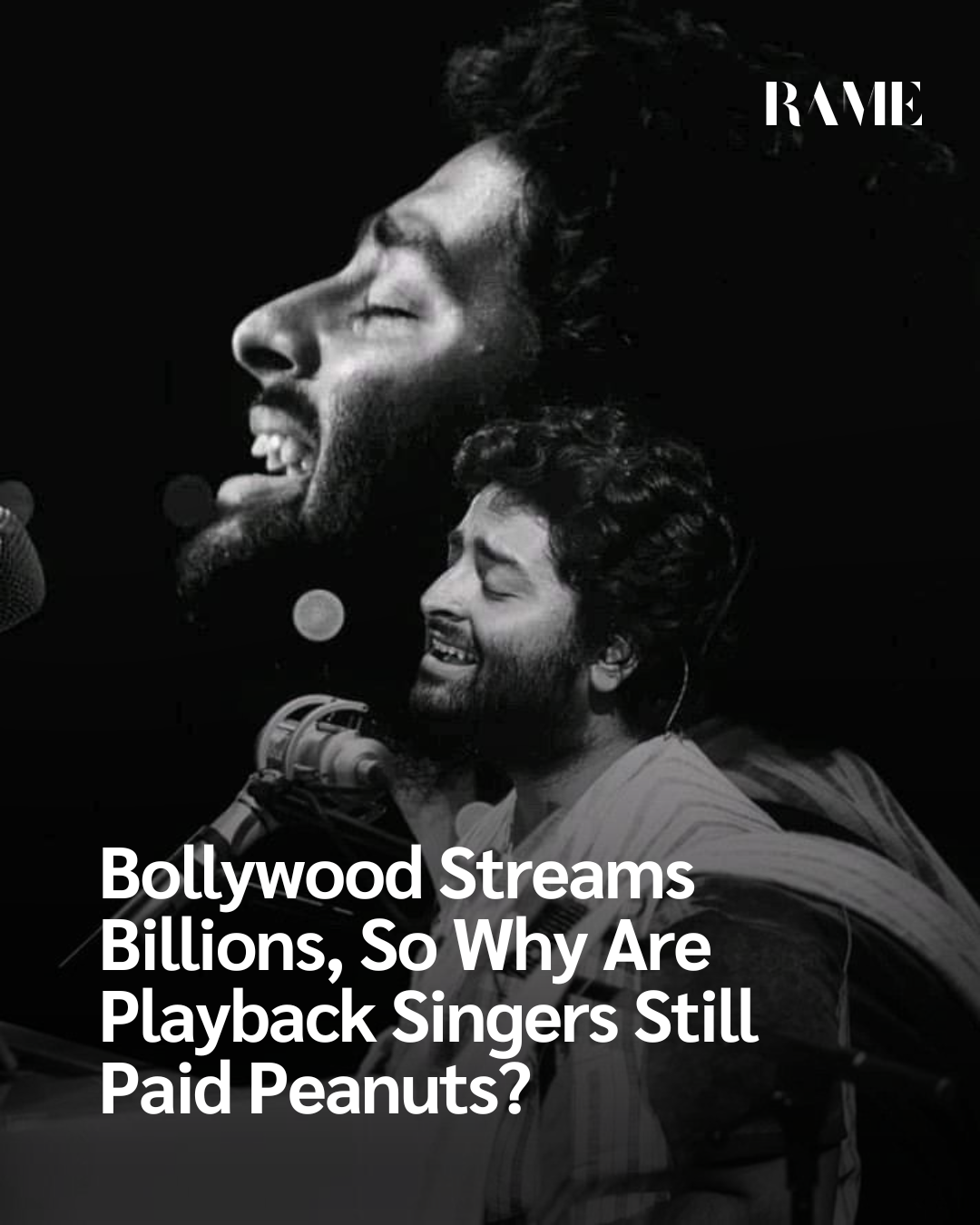
When millions stream a party anthem or weep at a romantic ballad, it feels intuitive that the voices behind those hits should be thriving, financially, artistically, and professionally. But look beneath the surface of Bollywood’s glittering music machine and an uncomfortable truth emerges: the singers who animate our favourite songs are often sidelined when it comes to long-term earnings and fair contracts.
Last month, when Arijit Singh publicly announced he was stepping back from playback singing, it reverberated beyond fan circles. For many observers, his decision was less about a personal crossroads and more about a system that rarely rewards vocalists in proportion to their cultural impact. At the same time, artists like Amaal Mallik have openly questioned the economics of the industry spotlighting deeper issues faced especially by rising talent.
One Hit, Many Hands, But Who Gets Paid?
Here’s the thing: Bollywood songs generate incredible engagement on platforms like YouTube, Spotify and Amazon Music. A chartbuster can rack up hundreds of millions of views. Yet most singers see only a one-time fee, if that. Why?
Under long-standing industry norms and current interpretations of Indian copyright law, the film producer typically holds the primary rights to the music created for a movie. Vocalists, composers and lyricists are usually paid a flat fee for commissioned work and do not automatically share in backend earnings unless explicitly negotiated in the contract. That means long-term digital revenues which can outpace traditional income go largely to producers and music labels, not the voices you hear.
Industry veteran Aastha Gill notes that while a hit track can generate massive streaming numbers, “if contracts aren’t structured well, vocalists may receive a one-time fee instead of long-term royalties.”
Contrast that with markets like the US or UK, where performers typically earn royalties tied to streaming and mechanical usage of their recordings. In Indian film music, such arrangements are rare and often situational.
A Tale of Two Singers: The Established and the Emerging
For top names, the headline figures can be impressive on the surface. Reports suggest leading artists may command upwards of ₹20–25 lakh per song from film projects, and premium concert fees into the tens of millions. Yet those figures often mask what happens across the wider singer ecosystem.
Industry sources say newcomers may earn only a few thousand rupees for a recording session, and some vocalists have claimed they received token amounts for songs that became iconic. A recent revelation by Kanika Kapoor illustrated this starkly she said some contracts offered as little as ₹101 for a track, framing it as a ‘favour’ rather than fair compensation.
And it’s not just about pay scales. Singer Krishna Beura recently highlighted that despite singing enduring songs like “Maula Mere” from Chak De! India, he was paid little an example of how unpredictable earnings can be even for tracks that become cultural staples.
Live Gigs vs Recorded Work The Income Equation
There’s a pattern here. For most singers working in film music, the real financial upside doesn’t come from the track itself it comes from the stage.
Concerts, corporate events and private shows often provide the bulk of a playback singer’s income. And that dynamic pushes artists to prioritise live performances over negotiating more equitable recording contracts. It’s one reason why a singer may accept less favourable clauses: they hope the exposure will boost their live demand.
But this model has drawbacks. Live performance income depends on continuous public attention and physical endurance. If an artist’s voice wanes or public tastes shift, that revenue tap can slow or stop entirely.
Structural Gaps That Hurt New Voices
Here’s another layer: the explosion of talent from reality shows and social media has flooded the market. While that expands the pool of artists, it also means producers and labels can treat singers as interchangeable especially when they hold the rights and negotiate contracts early in a film’s lifecycle, often before a song is even created.
A veteran artist turned commentator, Abhijeet Sawant, has said this system discourages singers from pushing for better terms because they fear being replaced. “If we don’t do it, someone else will,” he observed, describing the culture as one driven by compliance and opportunity rather than contractual fairness.
Copyright Law: What It Says and What It Means
Technically, Indian law includes provisions intended to protect performers. A 2012 amendment to the Copyright Act introduced a performers’ right that could, in theory, entitle singers to royalty income when their recorded performance is publicly used.
But in practice, these rights are underutilised in the context of film music. The contracts under which the majority of playback singers work typically assign all exploitation rights to producers or labels, leaving artists without ongoing stakes in the songs they breathe life into.
What This Means for Listeners
For audiences, this reality has some subtle effects. When listeners note repetition in soundtracks, or when fewer fresh voices break into mainstream spaces, it’s not just an artistic trend it’s partly economic. When only established singers with market leverage can negotiate better terms, emerging artists struggle to find platforms that pay sustainably.
And when backend earnings accrue largely to producers and labels, the incentive for innovation and diversity shrinks.
Thinking Ahead: Can the System Shift?
The music industry is evolving, with streaming platforms and independent labels challenging old models. But for Bollywood’s playback ecosystem, structural change would likely require more transparent revenue sharing, stronger performer rights enforcement, and standardised contract practices that ensure singers share in the long-term value they help create.
For listeners who care about the voices behind the songs, understanding these economics matters. What we assume about hit tracks often differs sharply from the economics that surround them.