

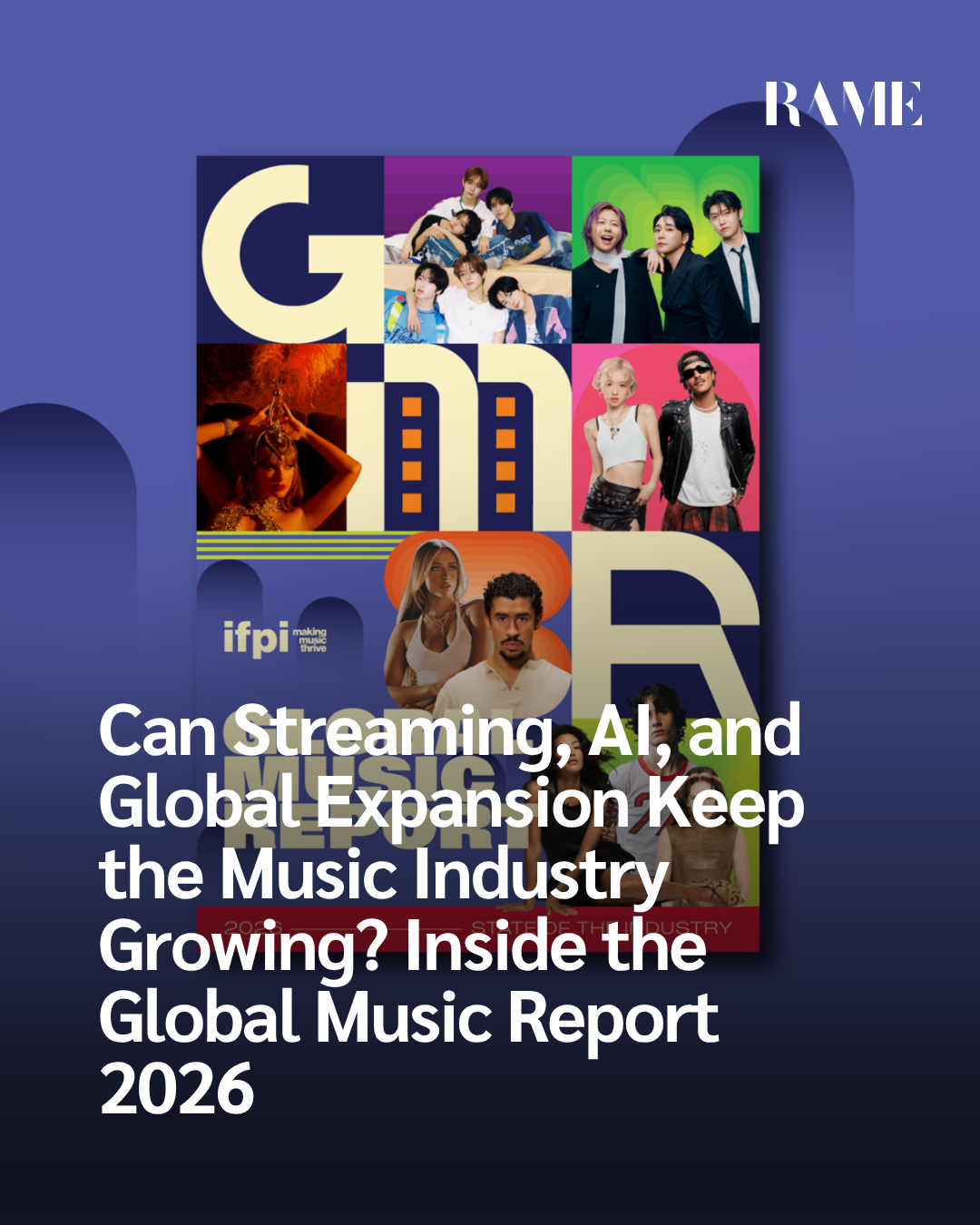
Introduction: A $31.7 Billion Industry Still Accelerating
The global music business has quietly entered one of its most sustained periods of expansion. According to the latest report from the International Federation of the Phonographic Industry, worldwide recorded music revenues climbed 6.4% in 2025 to reach $31.7 billion, marking the eleventh consecutive year of growth.
That number matters for more than bragging rights. It signals how dramatically the industry has evolved from its post-digital crash years a decade ago, when global revenues had fallen to roughly $13 billion. Today, the business has more than doubled, largely thanks to subscription streaming, global market expansion, and renewed investment from record labels.
But the story unfolding now is more complex than simple growth. Artificial intelligence, fraud prevention, and shifting power dynamics between technology platforms and artists are beginning to define the next phase of the industry.
Streaming Remains the Engine of the Modern Music Economy
Streaming continues to dominate the economics of recorded music worldwide. In 2025, total streaming revenues surpassed $22 billion, accounting for 69.6% of global recorded music income. Paid subscription streaming alone generated more than half of all revenue, growing 8.8% year-over-year and reaching 837 million subscribers globally.
This shift reflects a structural transformation that began in the mid-2010s but is now reaching maturity. Subscription platforms have reshaped how music is discovered, monetized, and distributed, effectively turning listening behavior into the core economic engine of the industry.
As Victoria Oakley, CEO of IFPI, put it:
“Great music from incredible artists, aided by record company partnerships and investment, is driving global growth – with more people than ever before paying to engage with it on paid streaming services worldwide.”
The result is a global market where access, rather than ownership, defines the primary revenue stream.
Record Labels and the Next Frontier: AI in Music
Beyond streaming, one of the most significant developments highlighted in the report is the growing role of artificial intelligence in the music ecosystem.
Record companies are actively exploring new licensing models with generative AI developers, aiming to ensure that artists are compensated when their work influences AI-generated music systems. The industry’s goal is not to block technological progress but to build a framework where innovation aligns with creator rights.
Oakley emphasized that balance:
“Technology can be harnessed to support and enhance creativity, not replace it.”
From a strategic perspective, this is critical. If AI becomes a dominant tool for music production, licensing structures established now could shape billions in future revenue. In that sense, the industry is trying to avoid repeating the mistakes made during the early file-sharing era.
The Rising Threat of Streaming Fraud
While streaming has powered the industry’s growth, it has also introduced a new vulnerability: streaming fraud.
Artificially inflated plays generated through bots or manipulated accounts divert revenue away from legitimate artists and labels. Industry leaders are increasingly framing the issue as a systemic risk rather than a marginal problem.
According to Oakley:
“Streaming fraud is theft, plain and simple.”
This issue is becoming more urgent as technology evolves. Automation tools and AI can scale fraudulent activity quickly, making detection harder and forcing streaming platforms, distributors, and rights organizations to collaborate more closely.
If unresolved, fraud could distort royalties, undermine trust in streaming metrics, and weaken the economic model that currently sustains the industry.
A Global Industry Expanding Across Every Region
One of the most striking insights from the report is the geographic diversification of growth. Every region recorded revenue gains in 2025, with several posting double-digit increases.
- Latin America: +17.1%, the fastest-growing region
- Asia: +10.9%, driven by strong gains in markets such as China
- Middle East & North Africa: +15.2%
- Sub-Saharan Africa: +15.2%
- Europe: +5.6%
- USA & Canada: +3.5%
This global expansion reflects a shift in how artists build careers. Success is no longer confined to a handful of dominant markets; local popularity can now translate into global streaming traction.
In fact, China overtook Germany to become the fourth-largest music market worldwide, highlighting how rapidly emerging markets are reshaping the industry’s center of gravity.
Meanwhile, blockbuster artists still play an outsized role in driving global engagement. In 2025, Taylor Swift was named the world’s best-selling recording artist, underscoring the continued power of global superstar cycles in the streaming era.
Vinyl’s Surprising Comeback and the Value of Physical Music
Even in a streaming-first world, physical formats are proving resilient. Revenues from physical music grew 8% in 2025, with vinyl sales increasing 13.7%, marking the format’s 19th consecutive year of growth.
This resurgence points to an important economic shift: physical products are increasingly positioned as premium fan experiences rather than mainstream consumption formats. Special releases, collector editions, and artist-driven merchandising strategies have turned vinyl into a high-value segment within the industry.
10 Key Takeaways from the Global Music Report 2026
Based on the report and industry analysis, here are ten of the most important insights shaping the global music economy:
- Global recorded music revenue reached $31.7 billion, surpassing $30 billion for the first time.
- The industry has now experienced 11 consecutive years of growth.
- Streaming generates nearly 70% of all recorded music income worldwide.
- Paid subscription streaming accounts for more than half of global revenue.
- There are now 837 million paid music streaming subscribers globally.
- Latin America is the fastest-growing music market region.
- Physical music formats are growing again, driven largely by vinyl demand.
- AI licensing and creator rights are emerging as central policy debates in music.
- Streaming fraud is becoming one of the industry’s biggest operational challenges.
- Growth is increasingly global, with nearly every major market expanding.
Together, these trends illustrate an industry that is evolving rapidly but also stabilizing around a new economic model built on subscriptions, data, and global distribution.
The Next Era of Music Will Be Defined by Technology and Trust
The global music industry’s resurgence is one of the most significant turnarounds in modern media. Just over a decade ago, the business was grappling with declining revenues and digital disruption. Today, it is expanding across continents, technologies, and platforms.
But the next phase will depend on how well the industry navigates two major challenges: technological transformation and economic integrity. Artificial intelligence could unlock new creative and commercial opportunities, yet it also raises questions about ownership, compensation, and authenticity. Meanwhile, streaming fraud threatens to erode the trust that underpins the entire digital ecosystem.
In other words, growth alone is no longer the story. The real question is whether the music industry can build a system that rewards creativity fairly while embracing innovation at scale.
If it succeeds, the next decade of music may be even more transformative than the last.