

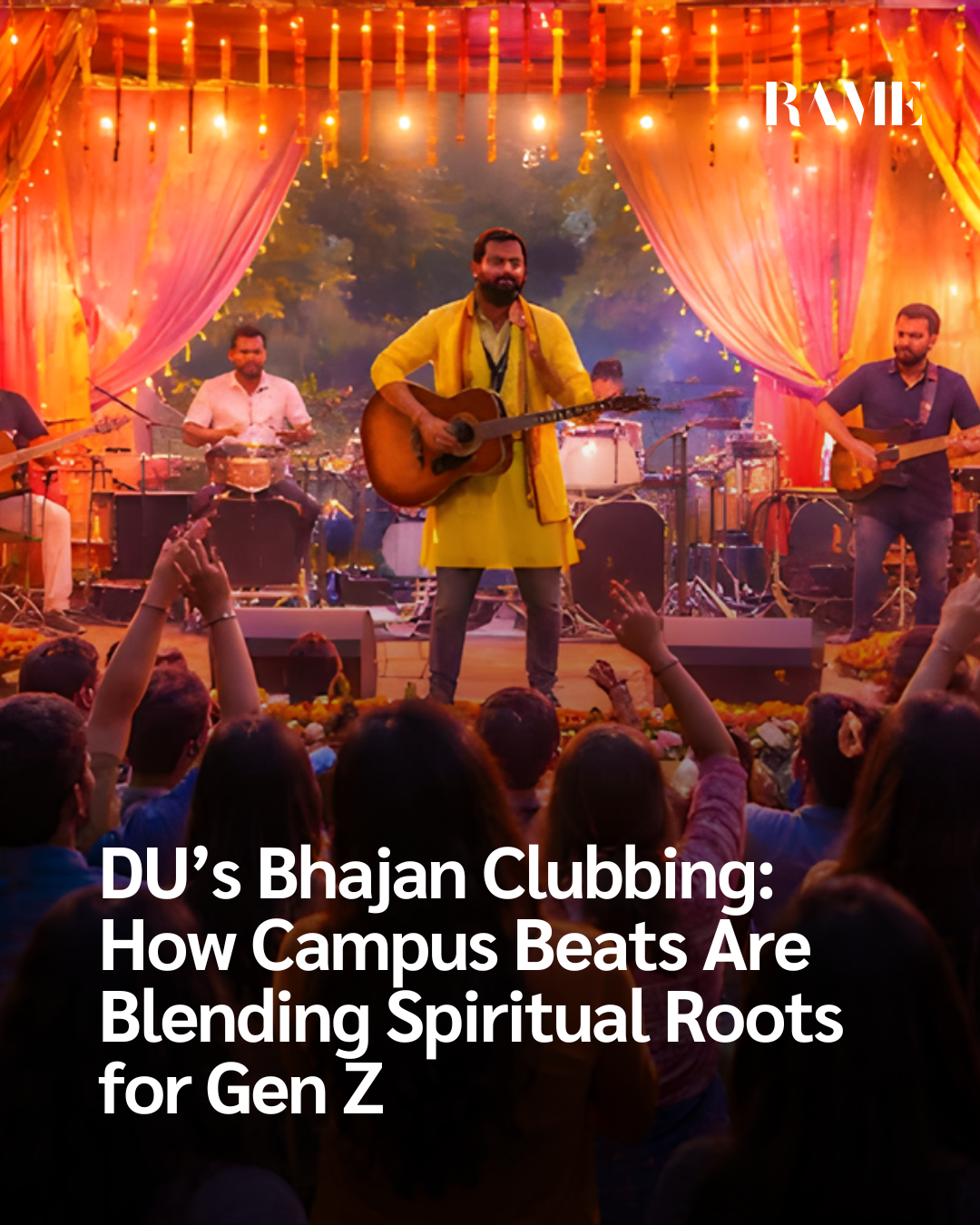
In an era where campus culture is increasingly shaped by DJs, indie gigs and electronic festivals, Delhi University has taken a different but quietly radical turn. This February, its colleges are resonating not with techno beats or pop anthems, but with bhajans, kirtans and devotional rhythms reimagined for a new generation.
The initiative, titled Bhajan Clubbing, is part of the Delhi government’s Vasantotsav 2026 celebrations and runs from February 10 to 19 across multiple DU campuses. The idea is simple but ambitious: reconnect young people with India’s spiritual and cultural traditions, using contemporary music formats they already relate to.
At a time when universities globally are grappling with questions around identity, belonging and mental wellbeing, the programme taps into a growing cultural trend where spirituality is being rediscovered not through rigid ritual, but through music, community and creative expression.
What Is Bhajan Clubbing?
Bhajan Clubbing is a series of live devotional music events hosted at Delhi University colleges, curated to blend traditional spiritual music with modern performance styles.
Announced by the Delhi government, the programme is positioned as a cultural intervention rather than a religious one. The focus is on participation, reflection and shared experience, not doctrine.
According to the official statement, the events aim to “blend traditional devotion with modern musical expression” and introduce bhajans and kirtans in formats that feel accessible and emotionally resonant for students.
This approach mirrors a wider shift in how young Indians engage with spirituality. From yoga festivals and meditation apps to devotional playlists on Spotify, faith and culture are increasingly being explored through aesthetic, musical and experiential mediums.
Youth Engagement Through Devotional Music
Art, Culture, Language and Tourism Minister Kapil Mishra described Bhajan Clubbing as a youth-focused cultural initiative guided by Chief Minister Rekha Gupta.
“Devotional practices such as bhajan and kirtan form the core of Indian culture and have found renewed interest among the youth in recent years,” Mishra said, adding that the goal is to present these traditions in a contemporary format that resonates with students.
He also referred to Prime Minister Narendra Modi’s comments on cultural participation during his Mann Ki Baat radio address, noting that there has been a broader national push to revive cultural engagement among young people.
This aligns with research from cultural institutions like the Indian Council for Cultural Relations (ICCR), which has consistently highlighted the role of music and performance in preserving intangible heritage, especially among younger demographics.
Bhajan Clubbing Events and Performances
The Bhajan Clubbing series features a diverse lineup of devotional and fusion artists performing across DU colleges:
- February 10: Leela Band at Ramjas College
- February 11: Raghav Raja at Deen Dayal Upadhyaya College
- February 12: India Music Collective at ARSD College (bhajans and meditation)
- February 12: Sadho Band at Shaheed Sukhdev College
- February 13: Rahasya Band at Shyam Lal College
- February 13: Keshavam at PGDAV College
- February 16: Keshavam at University Stadium (main event)
- February 19: SAM Band at Shivaji College (closing event)
The artists involved are known for blending classical devotional music with folk, indie and ambient influences, making their performances feel closer to a cultural gig than a religious ceremony.
Why This Resonates With a New Generation
What makes Bhajan Clubbing particularly interesting is not just its content, but its format.
Globally, there is a visible rise in what sociologists call “spiritual but not religious” identities. Young people are seeking meaning, grounding and emotional connection, but often outside formal institutional religion. Music has become one of the most powerful gateways into that space.
From kirtan raves in New York to yoga sound baths in Berlin and devotional lo-fi playlists on YouTube, spiritual music is being remixed into new cultural languages.
In India, artists like Anoushka Shankar, the Art of Living ensembles, and indie devotional collectives have already shown that spiritual music can coexist with modern aesthetics. Bhajan Clubbing brings that same logic into a university setting, where identity formation and emotional exploration are already central to student life.
Promoting Cultural Roots in Modern Formats
Mishra reaffirmed that the initiative is not about nostalgia, but relevance.
“The idea is to encourage students to engage with their cultural roots and spiritual traditions through music, while presenting these elements in a form that aligns with contemporary sensibilities,” he said.
Cultural scholars often argue that traditions survive not by remaining unchanged, but by adapting to new contexts. Bhajan Clubbing reflects that philosophy. Instead of preserving devotional music in museums or temples alone, it places it on college stages, alongside microphones, amplifiers and student audiences.
In doing so, it reframes bhajans not as relics of the past, but as living cultural tools, capable of speaking to anxiety, identity, belonging and emotional wellbeing in the present.
A Cultural Experiment Worth Watching
Whether Bhajan Clubbing becomes a long-term model for cultural programming in Indian universities remains to be seen. But as an experiment, it signals something important: young people are not rejecting tradition, they are renegotiating it.
They want culture that feels participatory, aesthetic, emotionally authentic and socially meaningful. Bhajan Clubbing taps into that desire by turning spirituality into an experience, not an instruction.
If successful, it could inspire similar initiatives across campuses nationwide, where culture is not something students study, but something they actively create, remix and live through music.
And in a world increasingly driven by noise, speed and distraction, there is something quietly powerful about thousands of students choosing to sit together and listen to songs about reflection, devotion and inner stillness.