

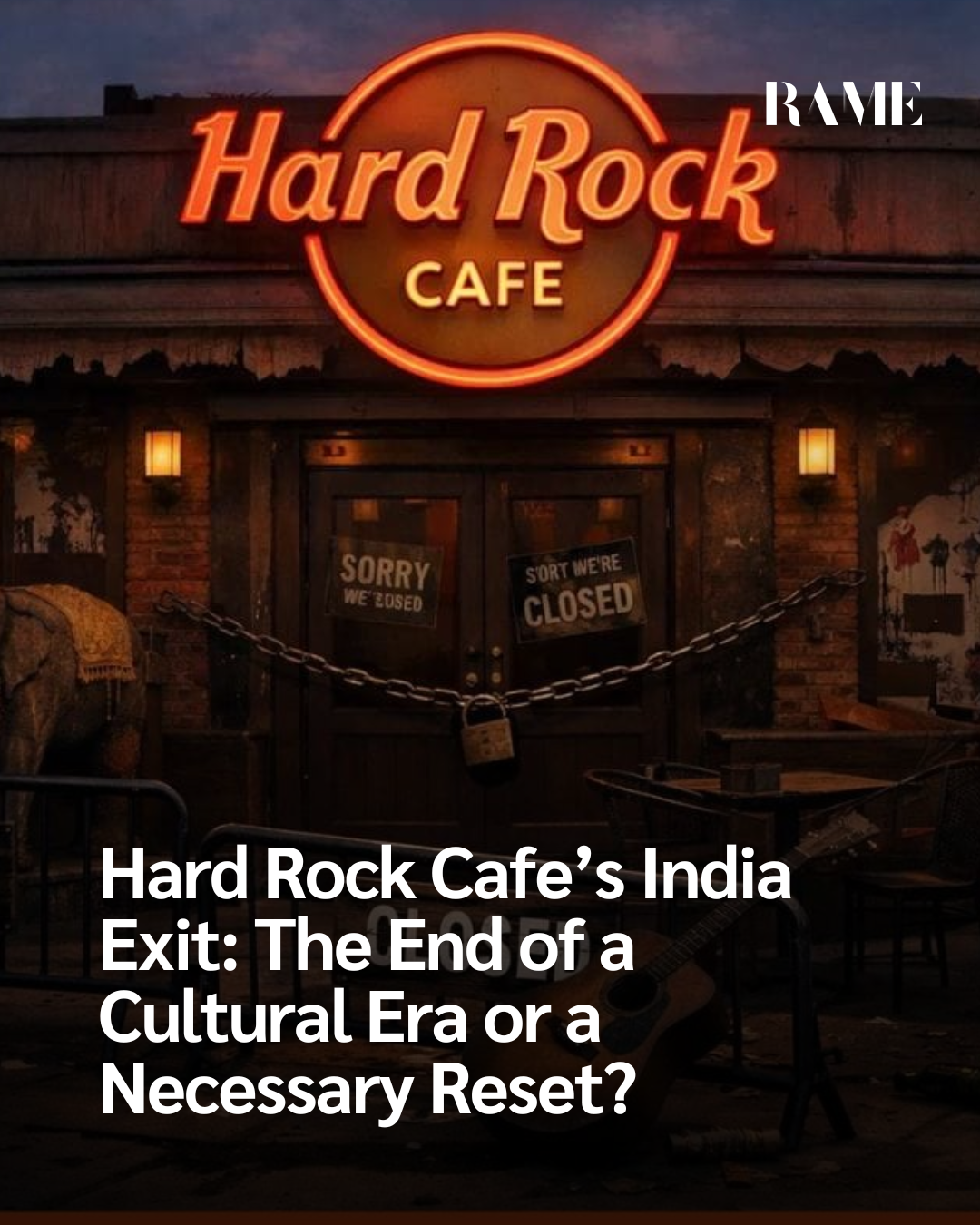
For decades, a night at Hard Rock Cafe wasn’t just about burgers and cocktails. It was about the music reverberating through dimly lit rooms, the memorabilia lining the walls, and the promise of a global cultural experience transplanted into Indian cities.
Now, that experience is fading. With the sudden closure of its outlets across India, the brand’s exit signals more than just a business decision. It reflects a deeper shift in how urban India dines, socialises, and consumes culture.
A Sudden Exit From India’s Urban Core
On March 16, Hard Rock International confirmed the shutdown of ten outlets across India following the termination of its licensing agreement with JSM Corporation Pvt Ltd, its long-time local franchise partner.
The closures span key metropolitan markets including Delhi, Bengaluru, Hyderabad, Chennai, Kolkata, Pune, and Chandigarh effectively erasing the brand’s restaurant presence from India’s most influential urban hubs.
While the move appeared abrupt to customers, industry insiders describe it as the culmination of mounting operational challenges. Rising commercial rents, shrinking margins, and strategic disagreements between the licensor and franchisee had reportedly strained the partnership for years.
A senior hospitality consultant, quoted in The Economic Times, noted, “Global brands entering India through franchise models often face friction when local market realities diverge from global expectations. Cost structures here can be unforgiving.”
More Than Dining: A Cultural Institution
Hard Rock Cafe’s significance in India went far beyond food and beverage. It pioneered a hybrid format part restaurant, part live music venue that helped shape urban nightlife in the 2000s and early 2010s.
At a time when India’s live music infrastructure was still developing, Hard Rock provided a professional stage for both international touring acts and emerging local artists. Cities like Mumbai and Delhi saw the brand become synonymous with rock gigs, tribute nights, and subculture gatherings.
Music journalist and critic Nikhil Taneja once observed in an interview with Rolling Stone India, “Hard Rock Cafe played a crucial role in building a live music ecosystem in urban India. It gave artists a reliable stage and audiences a consistent experience.”
But that identity began to blur over time. As programming shifted toward mainstream and Bollywood-driven nights, the brand’s core audience rock and alternative music enthusiasts began to disengage.
Cracks Beneath the Surface
The closure also exposes structural challenges facing legacy international brands in India’s fast-evolving F&B landscape.
Over the past decade, consumer preferences have shifted sharply toward:
- hyper-local dining concepts
- immersive, theme-driven experiences
- chef-led and independent ventures
- value-conscious pricing
According to a 2024 report by National Restaurant Association of India, nearly 60% of urban diners now prefer “experience-first” venues over legacy chains.
Hard Rock’s standardized global format, once its biggest strength, may have become a limitation in a market increasingly driven by localisation and novelty.
A hospitality analyst from Deloitte noted in a sector report: “Global chains that fail to adapt culturally and economically to India risk losing relevance, particularly as domestic brands become more agile and experimental.”
Internet Reacts: Nostalgia Meets Criticism
The closures have sparked a wave of reactions online, particularly on Reddit, where former patrons and performers shared mixed memories.
Some recalled the golden years of live music:
“Hard Rock Delhi used to host excellent rock gigs… loads of up-and-coming international bands.”
Others pointed to operational decline:
“The management was terrible… took months to get payments sorted.”
And some questioned whether the brand simply outgrew its audience:
“There are not many rock/metal music lovers in the country anymore.”
These perspectives highlight a broader truth: nostalgia alone cannot sustain a business model if the underlying experience no longer resonates.
Not the Final Goodbye?
Despite the closures, this may not mark a permanent exit. Hard Rock International has indicated plans to explore new partnerships and operational strategies in India.
Importantly, the Hard Rock Hotel Goa remains operational, as it falls outside the terminated licensing agreement. This suggests the brand is still testing the waters in India’s hospitality sector, albeit with a different approach.
Industry observers believe any comeback would likely involve:
- smaller, more flexible formats
- stronger localisation of menus and music programming
- partnerships aligned with evolving consumer expectations
A Turning Point for Global Hospitality Brands
Hard Rock Cafe’s exit underscores a larger recalibration underway in India’s dining and nightlife economy.
The message is clear: brand legacy is no longer enough. Today’s consumers demand relevance, authenticity, and constant reinvention. Global giants, once seen as aspirational, now compete with nimble homegrown players who understand the nuances of local culture better.
The bigger question is not whether Hard Rock will return but whether it can return differently.
Because in today’s India, success isn’t about importing a global experience. It’s about reimagining it for a market that has already moved on.