

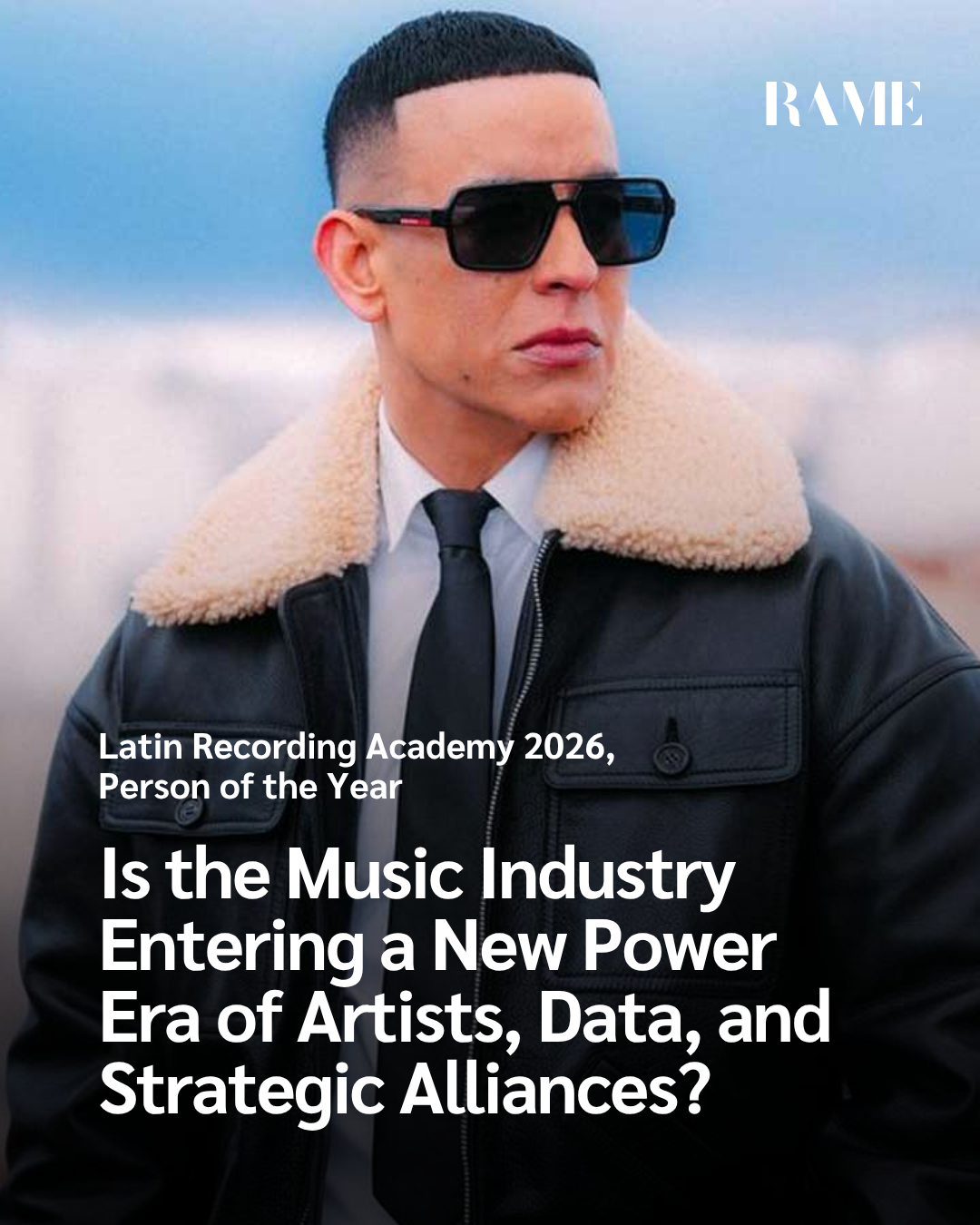
Image Credit: Isaac Reyes
The global music industry is shifting again this time at the intersection of cultural recognition, corporate consolidation, and artist welfare. From Daddy Yankee being crowned a cultural icon of a generation, to new-label alliances reshaping artist development pipelines, and growing concerns around mental health, the latest wave of announcements reveals a business recalibrating its priorities.
Here’s what these moves signal about where music is headed next.
Daddy Yankee’s Honor Signals a Cultural Milestone for Latin Music
When the Latin Recording Academy names someone Person of the Year, it’s rarely just about music it’s about legacy. In 2026, that legacy belongs to Ramón Luis Ayala Rodríguez, better known as Daddy Yankee.
A pioneer of reggaeton, Daddy Yankee didn’t just ride the Latin music boom he helped create it. His influence stretches from early underground movements in Puerto Rico to global chart domination, paving the way for artists like Bad Bunny and J Balvin.
“This recognition… is a dream come true,” he said, framing the award as a tribute not only to his career but to “Puerto Rico” and “all Latinos.”
Manuel Abud reinforced that sentiment, noting:
“Daddy Yankee has been a defining force in the global rise of Latin music.”
Analysis:
This moment reflects something bigger than one artist. Latin music now accounts for a rapidly growing share of global streaming revenue, driven by platforms like Spotify and YouTube. Honoring Daddy Yankee isn’t nostalgic it’s strategic. It reinforces Latin music’s permanence at the center of the global industry.
The November gala in Las Vegas, part of Latin Grammy Week, will likely double as both celebration and industry signaling: Latin music is no longer a category it’s a cornerstone.
Atlantic and Fader: A Partnership Built on Taste and Scale
In a move that blends indie credibility with corporate muscle, Atlantic Music Group has entered a multi-layered partnership with Fader Label.
The deal includes:
- A 50/50 joint venture for artist development
- Expanded distribution via Fader Distribution
- Broader services for emerging artists
Founded by Jon Cohen and the late Rob Stone, Fader built its reputation by spotting talent early artists like Clairo and Yuna.
Elliot Grainge described the label as “artist-forward,” while Cohen praised Atlantic’s willingness to “break the rules.”
Analysis:
This deal reflects a broader industry pattern: major labels are no longer trying to replace indie culture they’re partnering with it.
For Atlantic, this means access to credibility and early-stage talent discovery.
For Fader, it means global infrastructure without losing identity.
In an era dominated by algorithmic discovery, human “taste” is becoming a premium asset again. This partnership bets that curatorship—not just scale—will define the next generation of stars.
MusiCares Survey Highlights an Industry Under Pressure
While deals and awards dominate headlines, the quieter story may be the most urgent. MusiCares has opened its 2026 Wellness in Music Survey, asking a deceptively simple question: what does it take to sustain a life in music today?
Since 2020, the survey has tracked:
- Financial instability
- Mental health challenges
- Access to healthcare and support
The numbers are telling. MusiCares has distributed over $135 million in aid to date, including $17 million last year alone.
Analysis:
The contrast is stark. While the top tier of artists thrives in a streaming-driven global economy, much of the workforce behind the scenes touring staff, session musicians, independent creators faces increasing precarity.
The survey’s growing participation suggests rising awareness, but also deepening strain. As the industry scales globally, its support systems are being tested.
This is where the next major shift may happen: not in how music is distributed, but in how careers are sustained.
Publishing, Private Equity, and the Expanding Music Ecosystem
Beyond headlines, a series of strategic moves reveals how diversified the music business has become.
Songwriting Power Plays
Sony Music Publishing U.K. has signed songwriter Bastian Langebaek, known for collaborations with Olivia Dean, Anderson .Paak, and Jessie Ware.
Takeaway: Songwriters are increasingly valuable intellectual property hubs, not just contributors.
Finance Meets Music
Round Hill Music has appointed Chad Doerge as president and deputy CEO, working alongside founder Josh Gruss.
With a background spanning Aiera, Deutsche Bank, and Evercore ISI, Doerge’s appointment underscores how financial engineering is now central to music rights and catalog management.
New Label Ecosystems
Virgin Music Group is backing Suede Records, founded by Ari Elkins and Joey McCarthy.
With experience at Warner Music Group and Avex Music Group, Elkins represents a new kind of executive: digitally native, audience-aware, and brand-savvy.
Talent Agencies Expand Their Reach
Creative Artists Agency continues to invest in touring infrastructure with promotions for Noah Bryles, Andrew Dominijanni, and Rachel Green.
As live music rebounds post-pandemic, agencies are doubling down on specialized expertise from electronic to country to corporate bookings.
What This All Means: A Fragmented but Expanding Industry
Taken together, these developments point to three defining trends:
1. Cultural Power Is Global
Latin music’s rise isn’t a trend it’s structural. Daddy Yankee’s recognition cements that shift.
2. Partnerships Are the New Competition
Major labels and indie platforms are no longer rivals in the traditional sense. Collaboration is now the dominant strategy.
3. Sustainability Is the Industry’s Weakest Link
Behind the growth lies a fragile workforce. MusiCares’ work highlights a gap the industry can no longer ignore.
The Bigger Question
Here’s the thing: the music industry has never been more successful and never more uneven.
At the top, artists are global brands.
In the middle, companies are forming increasingly sophisticated alliances.
At the bottom, many creators are still struggling to stay afloat.
The question now isn’t whether the industry will grow. It’s whether it can grow responsibly.
Because if the next decade belongs to global hits and billion-dollar catalogs, it should also belong to building an ecosystem where more than just a few can thrive.