

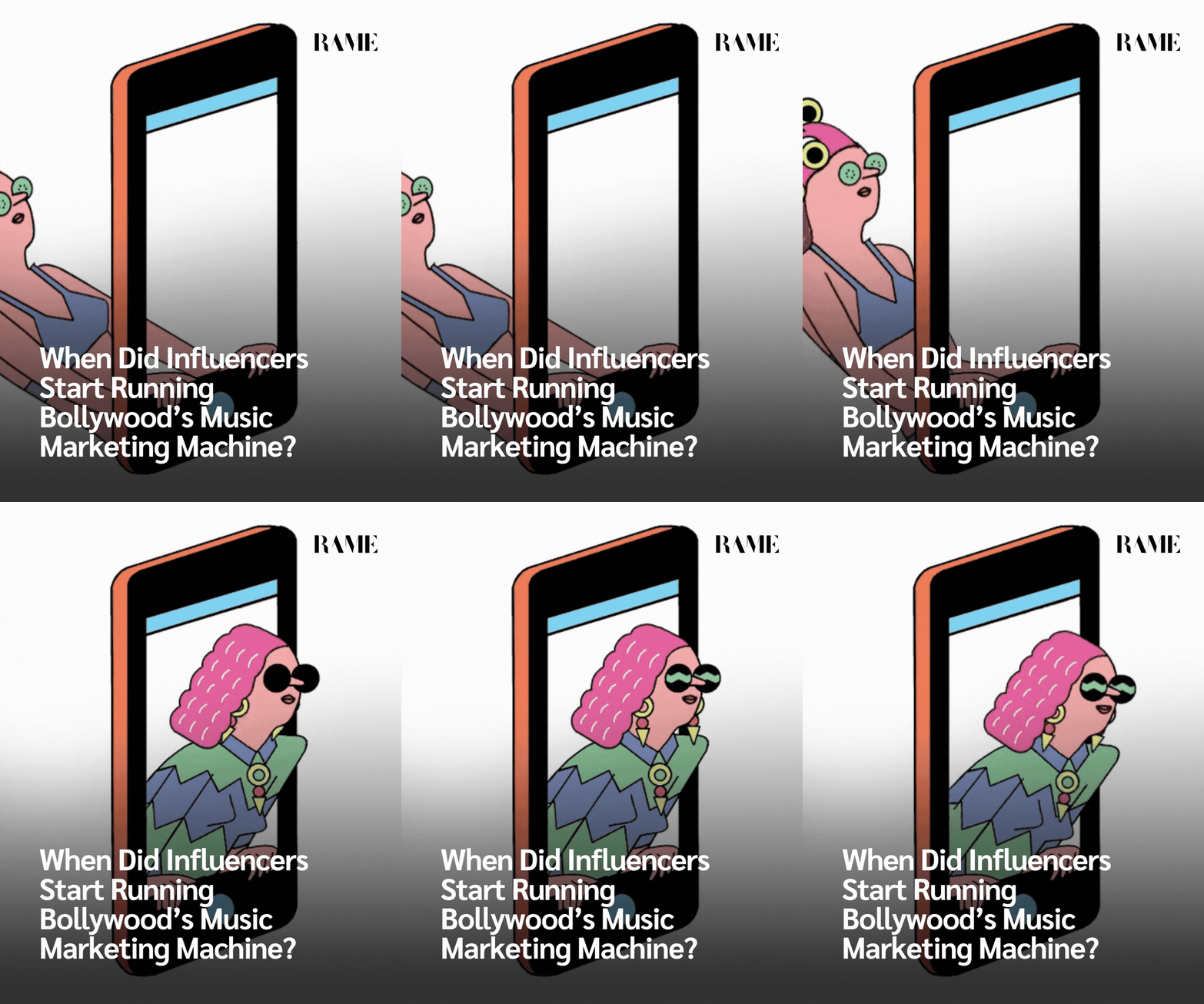
Image Credit: Elena Xausa and Lorenzo Fonda
The Hook: A Hit Song Is No Longer Just About the Music
There was a time when a film soundtrack lived or died by radio play, TV appearances, and maybe a few billboard spots. That era is gone. Today, whether a song trends on streaming charts often has less to do with melody and more to do with marketing muscle.
A recent report by The Economic Times reveals a striking shift: nearly 50% of the promotional budget for Indian film songs is now spent on influencer collaborations. In a market where virality can make or break a track within hours, the music industry has quietly rewritten its playbook.
Here’s what that means, and why it matters.
The New Budget Breakdown: Influencers Take Center Stage
According to the report, music labels in India are allocating their promotional budgets roughly as follows:
- 50% → Influencer collaborations (Instagram Reels, short-form video campaigns)
- 30% → Paid promotions on YouTube
- 20% → Audio streaming platforms to boost discoverability
The total cost of promoting a single track now ranges between ₹15 lakh and ₹1.5 crore ($16,000–$160,000 approx.).
That’s not a marginal shift. It’s a structural one.
For context, Vikram Mehra, chairman of Indian Music Industry and managing director at Saregama, said in 2025 that labels were spending around ₹1 crore per track on promotion for Hindi film albums. The new numbers suggest that budgets are not just holding steady they’re being aggressively reallocated.
Why Influencers? The Algorithm Has Changed the Game
Let’s break this down. Why are influencers suddenly commanding half the budget?
The short answer: they deliver what traditional advertising no longer can, organic virality.
Short-form video platforms like Instagram Reels and YouTube Shorts have become the primary engines of music discovery in India. With over 600 million internet users engaging heavily with short-form content, these platforms offer unmatched scale and speed.
More importantly, influencer campaigns don’t feel like ads. They feel like culture.
Industry insights show that:
- Fans trust influencer recommendations more than direct advertising
- Dance challenges, lip-sync trends, and meme formats accelerate shareability
- Micro-influencers often deliver higher engagement than celebrities
As one marketing analysis notes, influencer campaigns thrive because they blend authentic storytelling with precise audience targeting, turning passive listeners into active participants.
From YouTube Ads to Reels: A Power Shift in Promotion
Just a few years ago, YouTube dominated music promotion budgets. Today, it’s second place.
This mirrors a global trend. Platforms like TikTok have already proven that viral short-form content can directly influence charts and streaming rankings, with labels increasingly paying creators to seed trends.
India is now following the same trajectory, but at scale.
The implication is clear:
music marketing is no longer about broadcasting, it’s about participation.
The Rising Cost of Soundtracks and Why Labels Are Hedging Their Bets
Promotion is only one side of the equation. The cost of acquiring music rights is also rising sharply.
According to Mehra:
- Labels now spend ₹20–35 crore to acquire soundtrack rights
- Up from ₹15–25 crore in 2024
Faced with escalating costs, major players like Saregama and Universal Music Group are making strategic moves upstream.
They’ve begun investing directly in film production companies such as:
- Bhansali Productions
- Excel Entertainment
These deals ensure automatic access to soundtracks, effectively reducing acquisition risk and securing a steady content pipeline.
It’s vertical integration, Bollywood-style.
The Influencer Economy Meets Regional India
Another reason influencer marketing works so well in India is its depth beyond metro cities.
Regional creators from niche cultural communities to vernacular content makers—offer:
- Strong emotional resonance
- Hyper-local reach
- High trust among audiences
Reports show that influencers in smaller cities and regional markets are now central to brand and content strategies, helping campaigns penetrate deeper into India’s diverse audience base.
In other words, influencers don’t just amplify songs they localise them.
The Hidden Risk: Are Hits Being Engineered, Not Earned?
Here’s where things get complicated.
If half of a song’s success depends on paid amplification, what does that mean for artistic merit?
There’s growing concern that:
- Songs are being engineered for virality rather than longevity
- Labels prioritise “Reel-friendly hooks” over musical depth
- Chart success may increasingly reflect marketing spend, not listener preference
At the same time, regulatory bodies like the Indian Influencer Governing Council are stepping in to introduce standards aimed at improving transparency in influencer marketing.
But enforcement remains a challenge in a rapidly evolving ecosystem.
The Bigger Picture: Music as Content, Not Just Art
Step back, and a larger transformation becomes visible.
Music is no longer just an audio experience. It’s:
- A visual format (Reels, Shorts)
- A social trend (challenges, memes)
- A marketing asset (campaign-driven virality)
In this new ecosystem, the success of a song is increasingly determined before listeners ever press play.
Conclusion: Is This the Future of Music or a Bubble Waiting to Burst?
The shift toward influencer-led promotion reflects a deeper truth: attention is the most valuable currency in entertainment today.
But it raises a question worth sitting with:
If success can be bought, amplified, and engineered at scale,
what happens to the songs that don’t have a ₹1 crore marketing push behind them?
The Indian music industry is evolving fast, blending creativity with algorithmic strategy. Whether this leads to a more dynamic ecosystem—or a more manufactured one will depend on how long audiences continue to reward what they’re being shown.
Because in the end, even the most perfectly executed campaign still depends on one unpredictable factor:
whether people actually care enough to listen again.