

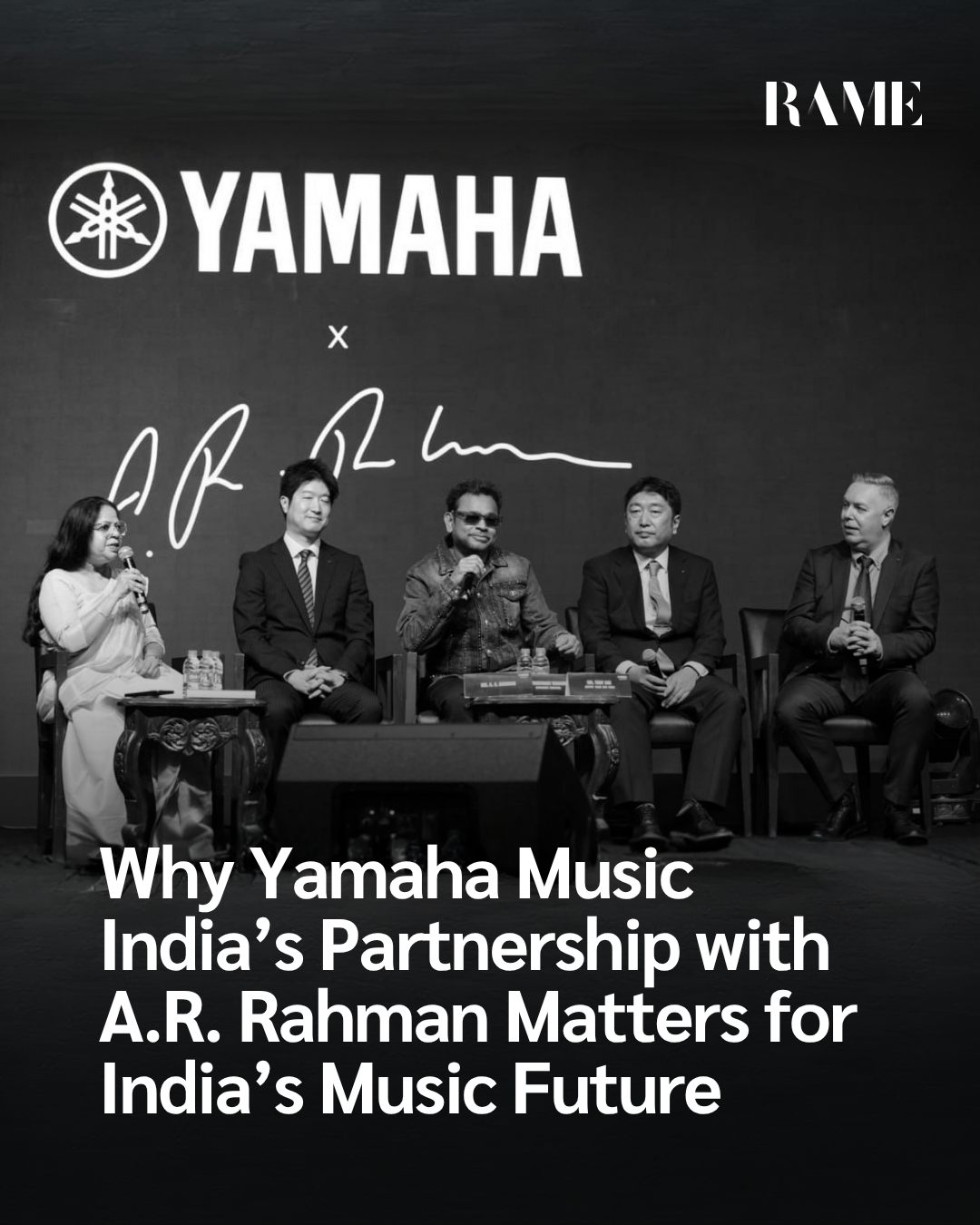
Introduction: When a Global Maestro Meets a Global Brand
India’s music industry is undergoing a quiet but significant transformation. As streaming, independent music, and formal training ecosystems expand, global instrument makers are looking more closely at the country’s creative potential. Against this backdrop, A.R. Rahman joining Yamaha Music India as brand ambassador is more than a marketing announcement. It signals a deeper alignment between a legendary musician and a company positioning itself at the heart of India’s next musical chapter.
The collaboration reflects shared goals: expanding access to quality instruments, strengthening music education, and nurturing the next generation of artists across the country. Industry observers see the move as a strategic effort to build a broader ecosystem rather than simply promote products.
A.R. Rahman’s Global Influence and Cultural Reach
Few artists represent the international success of Indian music as strongly as A.R. Rahman. Over three decades, he has shaped film music, world music collaborations, and digital-era soundtracks while carrying Indian musical traditions to global audiences. His landmark moment came with the film Slumdog Millionaire, which earned him two Academy Awards for Best Original Score and Best Original Song.
A.R. Rahman’s career has consistently blurred boundaries between genres and cultures. From orchestral film compositions to electronic experimentation, his work has helped reposition Indian music as a global creative force. The composer himself highlighted this broader mission when discussing the collaboration:
“My musical journey began in India and evolved across global stages. If we mentor young artists and strengthen music education, Indian music can lead on the global stage.”
Beyond composing, A.R. Rahman has invested heavily in music education and social initiatives, including training programs for young musicians and institutions designed to bridge Indian and Western music traditions.
Yamaha’s Long-Term Bet on India’s Music Ecosystem
For Yamaha, India is not just another emerging market. It is a strategic growth region within the company’s broader expansion plans through the late 2020s. With a population exceeding 1.4 billion and a rapidly growing creative economy, the country presents opportunities across education, performance, and technology-driven music production.
According to company leadership, the partnership with A.R. Rahman is meant to amplify these ambitions.
“India’s rich musical heritage deserves global recognition. Through our ‘Made in India’ initiative and our collaboration with A.R. Rahman, we aim to inspire the next generation of musicians,” said Taketoshi Yamamoto.
Yamaha has already taken steps to localise its operations, including establishing a manufacturing facility in Chennai in 2019 and expanding distribution networks and music programs across the country.
This localisation strategy aligns with India’s broader push toward domestic manufacturing and skill development under initiatives commonly referred to as “Made in India.”
Education, Outreach, and the Next Generation of Musicians
A defining element of the partnership is its focus on structured music education. Rather than limiting the collaboration to advertising campaigns, Yamaha plans to invest in programs involving schools, music academies, and community outreach.
“Our mission extends beyond instruments. We are committed to nurturing music communities through workshops, school collaborations, and rural outreach programs,” explained Ryoji Maruyama.
A.R. Rahman’s own institutions are expected to play a role. His Chennai-based KM Music Conservatory and initiatives like youth orchestral training programs reflect a similar philosophy: accessible, globally relevant music education.
Analysts say this educational push could have ripple effects across India’s music landscape. Formal training, access to professional instruments, and mentorship networks often determine whether emerging musicians can build sustainable careers.
The Soft Power Dimension of Music
There is also a geopolitical and cultural angle. Music has increasingly been recognised as a form of soft power, shaping how countries project their identity globally. India’s expanding creative industries from film and streaming to live concerts are already influencing global audiences.
A.R. Rahman’s involvement strengthens that narrative. His work has long connected Indian classical elements with international production standards, making him an ideal bridge between tradition and modernity. The Yamaha partnership effectively formalises that role within a broader industry strategy.
In practical terms, it could also accelerate the development of infrastructure around music education, instrument manufacturing, and professional training areas where India has historically lagged behind major global music hubs.
Strategic Impact: Branding, Innovation, and Industry Growth
From a business standpoint, the partnership benefits both sides. Yamaha gains a globally respected ambassador whose credibility resonates with aspiring musicians and professionals alike. A.R. Rahman, meanwhile, aligns with a brand deeply embedded in the global music instrument ecosystem.
The initiative also reflects a larger trend in the music industry: brands moving beyond sponsorships toward ecosystem-building. Companies are increasingly investing in education, creator communities, and digital platforms that support artists at every stage of their journey.
If executed effectively, this collaboration could help India evolve from a major consumer of music to a global centre of music innovation and talent development.
Conclusion: A Partnership That Could Shape India’s Musical Future
At first glance, celebrity brand partnerships are easy to dismiss as routine marketing. But this one carries broader implications. When a composer who helped redefine Indian music globally teams up with one of the world’s most influential instrument manufacturers, the focus shifts from branding to infrastructure.
The real question now is not whether the collaboration will boost Yamaha’s visibility it almost certainly will. The bigger question is whether initiatives around education, accessibility, and local manufacturing can truly reshape India’s music ecosystem.
If they do, the impact could be lasting: a generation of musicians with better tools, better training, and a clearer path to the world stage.
And in that sense, this partnership may end up being remembered less as an endorsement deal and more as a milestone in the evolution of India’s music industry.