

A New Message for the Next Generation of Music Talent
In today’s global music economy, the conversation around success is shifting. It is no longer only about chart-topping singles or viral hits. Increasingly, industry leaders are urging young artists to understand the business behind the music they create.
That message was front and centre at the recent Jamaica Creative Career Expo in Kingston, where policymakers and music executives highlighted a crucial but often overlooked pillar of the industry: music publishing. The event, organised by the Ministry of Culture, Gender, Entertainment and Sport in partnership with the Island Music Conference (IMC), brought together young creatives and seasoned professionals to discuss careers across music, media and publishing.
At the heart of the discussion was a simple but powerful idea: creators must own and manage the rights to their work if they want to build lasting wealth.
Why Music Publishing Matters More Than Ever
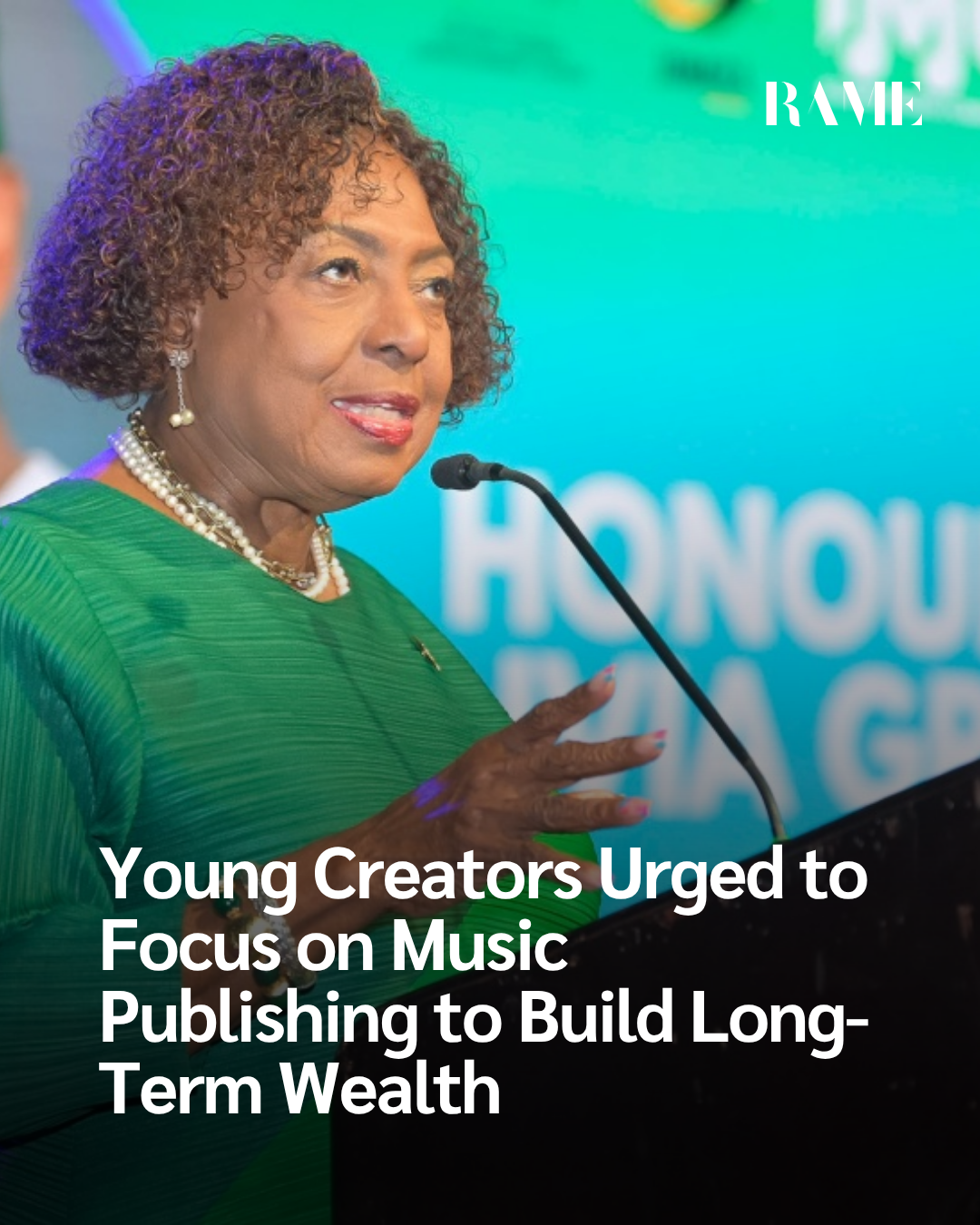
Minister of Culture, Gender, Entertainment and Sport, Olivia Grange, used her keynote address to highlight how publishing transforms a song into a long-term financial asset.
“This is how wealth is created in the modern music industry, and it is important that young people and practitioners understand the business of creativity from copyright literacy and contract negotiations, to publishing administration and global distribution,” she said.
Music publishing refers to the management, protection and monetisation of the composition of a song specifically the lyrics and melody. Publishers ensure that songwriters are paid whenever their work is performed publicly, streamed, reproduced or licensed for film, advertising or other media.
In practical terms, this means income flows long after a song’s release. Performance royalties, mechanical royalties and sync licensing fees collectively generate ongoing revenue for rights holders. Industry data suggests performance royalties account for roughly 42% of publishing income, mechanical royalties around 35%, and sync licensing roughly 15%, demonstrating how diverse the revenue streams can be.
Grange emphasised that many creators underestimate this long-term value.
“Every time a song is played on the radio, streamed online, used in a film, or performed on a stage, it generates income through publishing,” she noted.
The Knowledge Gap Holding Caribbean Artists Back
Despite the opportunities, experts say a lack of business education remains one of the biggest barriers facing many artists in the Caribbean.
Entertainment attorney and legal consultant Sapna Lal warned that without proper knowledge of publishing fundamentals, many musicians miss out on significant revenue.
“Having your business properly set up and organised is key. I do not think a lot of artistes, especially in Caribbean countries, have their businesses set up properly,” she said.
One critical tool, Lal explained, is the split sheet a document signed after a song is completed but before its release. The agreement clarifies each contributor’s ownership percentage and determines how royalties will be divided.
“Before the song becomes a hit, you have to have your publishing in order,” Lal said. “When it becomes a hit and you do not have that part done, it is going to be a huge mess… it could take years to clear.”
Her warning reflects a broader industry reality: disputes over ownership and royalties are among the most common legal issues facing artists worldwide.
Building the Right Team in a Complex Industry
While ownership is essential, industry executives also stress that success rarely happens in isolation.
Ethan Baer, Director of Artists and Repertoire (A&R) at Warner Chappell Publishing in Los Angeles, encouraged emerging creators to surround themselves with a reliable professional network.
“Find your village. Establish people who are in your corner for the right reasons,” Baer said. “I do not think anybody that I have ever worked with has written, produced, engineered, released, done the agreement and collected the money by themselves.”
Baer’s career includes work on projects such as Buju Banton’s Grammy-nominated reggae albums Upside Down 2020 and Born for Greatness, as well as soundtracks for Paramount Pictures productions.
His message reflects the reality of today’s industry ecosystem, where managers, publishers, producers and legal advisors all play a role in ensuring artists capture the full value of their work.
Collaboration and Global Momentum
Music executive John Baker, owner of Geejam Studios in Portland, reinforced the importance of collaboration in expanding a song’s reach.
“One big tune recently was Shake it to the Max. How that evolved was incredible,” Baker said, describing how the track gained momentum organically as artists and producers joined the project, eventually becoming a global hit.
Stories like this highlight how modern music success is often built through networks, shared creativity and strategic promotion rather than individual effort alone.
Events like the Jamaica Creative Career Expo are designed to foster exactly these kinds of connections. The initiative, which targets secondary and tertiary students, aims to expose young people to opportunities in the creative industries and demonstrate that music can be both a cultural expression and a viable career path.
Meanwhile, the Island Music Conference has grown into a major regional platform bringing together artists, executives, and innovators from across the global music ecosystem to exchange ideas and develop partnerships.
The Bigger Picture: Publishing in the Streaming Era
The renewed emphasis on publishing also reflects broader shifts in the music business. Streaming platforms have expanded global reach but have also complicated how artists earn money.
Recent industry reports show that streaming services paid billions in royalties to rights holders, underscoring how crucial publishing rights are for songwriters and composers within the digital economy.
At the same time, investors increasingly view music royalties as stable long-term assets, highlighting the growing financial significance of song catalogues in the modern entertainment landscape.
In other words, songs are no longer just cultural products. They are intellectual property assets capable of generating revenue for decades.
A Turning Point for Emerging Creators
The conversations emerging from the Jamaica Creative Career Expo suggest a turning point in how young artists approach their careers. Creativity remains the foundation of the industry, but business literacy is becoming just as important.
For many emerging musicians, the challenge now is not only to write and perform great music but also to understand ownership, contracts and publishing structures that determine who benefits from success.
If the message delivered in Kingston gains traction, it could reshape the trajectory of the Caribbean music industry empowering creators to build sustainable careers while retaining control over the value they generate.
The question facing the next generation is straightforward but consequential: in a global industry where songs can live forever, who will own the future earnings of the music being made today?